Wire Leader Ban and Seabass: California Anglers Needed Thursday
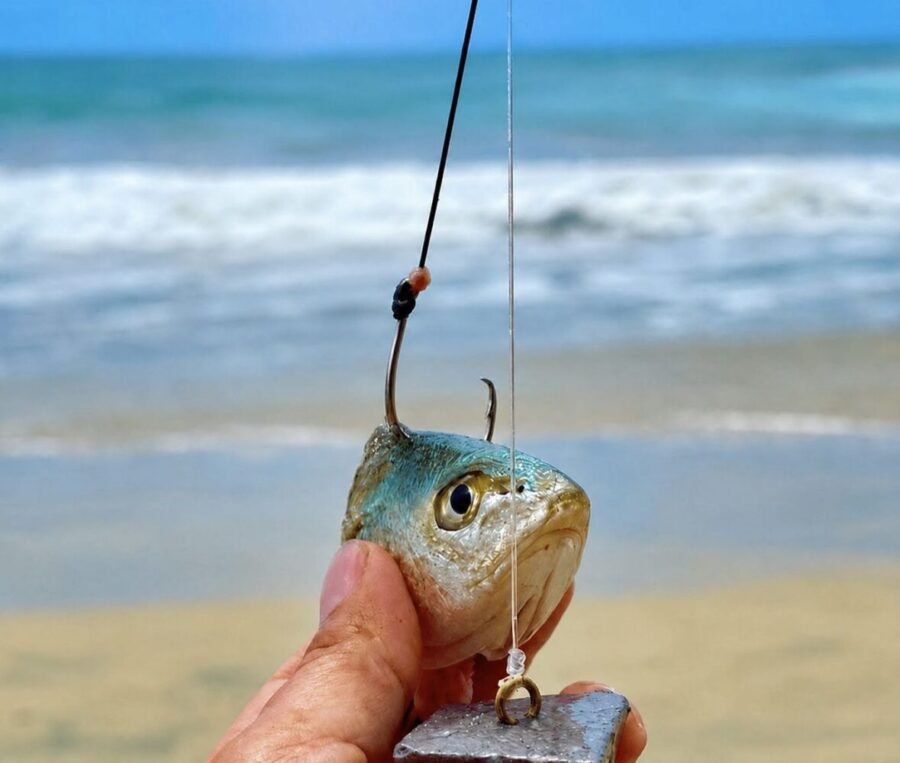
If you fish the California coast for sharks, white seabass, or really any species from shore, this Thursday’s meeting is one you need to know about. The California Fish and Game Commission’s Marine Resources Committee convenes on July 16, 2026 at 9:00am and two items on the agenda directly affect surf anglers in a significant way.
The wire leader ban is already in effect as of late June — if you haven’t read the full breakdown of what’s now legal and illegal, refer to the announcement made here: California Wire Leader Ban Now in Effect — What It Means. This article is about what comes next and how to make your voice heard before decisions get made without you again.
I’ll be attending (I haven’t figured out if I’ll be there in person or over Zoom). I need as many of you as possible to show up in the room or on Zoom.
Call To Action Summary
There is a California Fish and Game Commission Marine Resources Committee meeting this Thursday, July 16, 2026 at 9:00am with two agenda items that directly affect California surf and shark anglers.
View the Full Meeting Agenda Here
What’s being discussed:
- Item 3 — Wire Leader and Hook Size Ban: The emergency regulation already in effect will be reviewed. The Committee will consider whether to modify it, extend it, or let it expire in December. This is your chance to be heard before it potentially becomes permanent.
- Item 2 — White Seabass Regulations: Potential interim changes to recreational white seabass regulations including a possible minimum size increase are on the table for discussion.
How to participate — takes 5 minutes:
- In person in La Jolla: Scripps Institution of Oceanography, Eckart Building Room 137, 8755 Biological Grade, La Jolla CA 92037
- Zoom: http://wildlife-ca-gov.zoom.us/j/89836477592#success
- Phone: Visit fgc.ca.gov/meetings/2026 for dial-in number — press *9 to raise your hand to speak
- Watch only: Live stream at www.fgc.ca.gov day of meeting
When your item comes up, raise your hand, state your name and fishing experience, and keep comments under 2 minutes. Read the full article below for what to consider saying.
Why This Meeting Is Different From the One That Passed the Ban
The June 17 Commission meeting that passed the wire leader ban had four public speakers. All four supported it. However, the surf fishing community — the group most directly affected — was largely unaware the vote was happening until after it was done.
Thursday is a different opportunity. The Marine Advisor to the California Fish and Game Commission reached out to me personally this week, noting she hadn’t seen any blogs or social posts alerting anglers to the meeting and asking whether surf and shark fishing participants were planning to attend. That’s an invitation worth taking seriously.
The Marine Resources Committee operates informally. The two Commissioners co-chairing this meeting are the same people who will make recommendations to the full Commission about what happens to both the wire leader regulation and the white seabass fishery. Getting in front of them directly, with real numbers and real voices representing real fishing experience, is the highest-leverage opportunity anglers have had since this process started.
Item 3 — The Wire Leader Ban: What the Committee Will Decide
The Committee will review the emergency wire leader and hook size regulation, discuss its rationale, and consider possible next steps after the 180 day lapse window including:
- Readopting the regulation as-is for up to two 90-day extensions
- Modifying it to be more narrowly targeted
- Allowing it to expire in December 2026
Shark Stewards — the conservation advocacy group that publicly supported this measure — has already announced they are pushing for the regulation to be made permanent past the December expiration. They will be organized. They will be represented. The question is whether anglers are too.
The core argument worth making Thursday:
Wire leader is not optional gear for leopard sharks, soupfin sharks, sevengill sharks and more species fished for from the surf. These species have teeth that saw through monofilament leaders regularly. Without wire, more fish break off mid-fight and swim away with hooks and monofilament line trailing from their mouths — a worse outcome for the sharks, not a better one.
What should change: To be perfectly honest, I disagree with the limitation altogether, but some compromises are better than not being able to use wire at all. A more targeted rule that addresses the specific gear and behavior actually associated with white shark interactions near crowded piers – not a blanket coastwide ban affecting every angler targeting every shark species from shore – would be a better (not perfect) route here. Some potential ideas to more narrowly target the matter.
- Increased enforcement of existing laws
- Location-specific restrictions (highly targeted – not general… we should be able to fish most beaches)
- Time-of-day component (only limit 10am-4pm)
- Combined hook-size-plus-wire-leader strength threshold
- Bait size restrictions
These would all achieve the public safety goal without the unintended harm to a responsible, sustainable fishery.
For the full breakdown of the regulation, its origins, and the detailed case for a more targeted approach, read our complete analysis here: California Shark Fishing Ban: Full Details of Emergency Measure
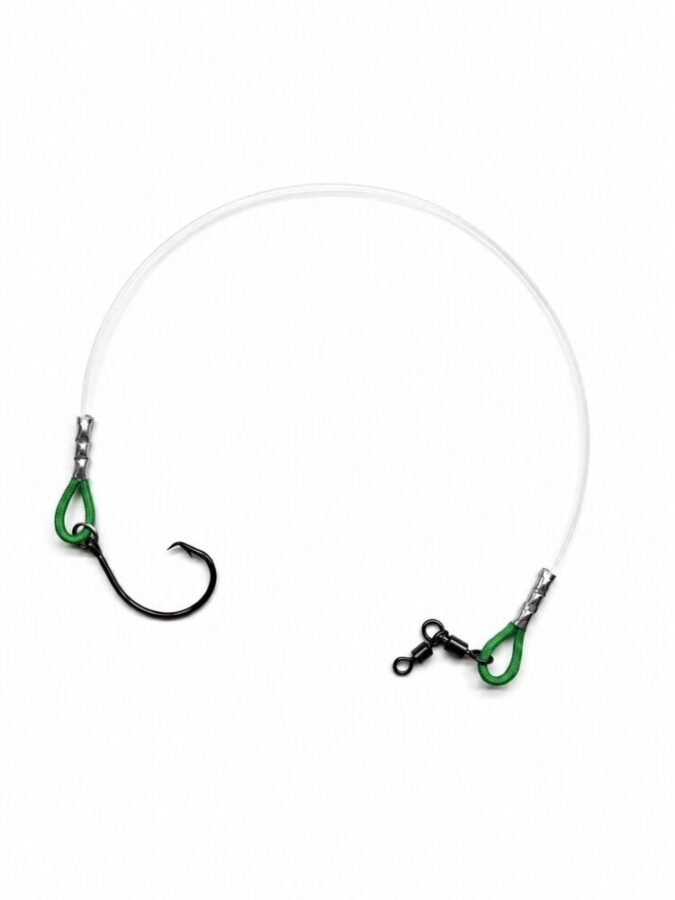
I have replaced my old 90lb wire leaders with these 200lb mono leaders for now.
Item 2 — White Seabass Minimum Size Increase: What’s Being Discussed and Where I Stand
This is the second major item on Thursday’s agenda and it deserves real attention from anyone who fishes for white seabass from the surf or from a boat.
The Committee will receive and discuss Department options for interim changes to recreational white seabass regulations as part of a broader management review. The current recreational minimum size for white seabass is 28 inches. A potential increase to that minimum size is what’s being evaluated.
The biology — what the research actually says:
White seabass reach sexual maturity at around 3-4 years old at roughly 20-24 inches in length. They reach the current legal keeper size of 28 inches at approximately 5 years old. That means under the current 28-inch minimum, a white seabass has typically had 1-2 years of spawning opportunity before it can legally be harvested — which was actually the original intent when the 28-inch minimum was first established back in 1931.
Females can spawn 4-5 times per season and can live up to 27 years. A higher minimum size limit would allow for significantly more breeding cycles before a fish enters the legal fishery, which on paper strengthens long-term population resilience.
The population reality — and where your instinct is right:
Here’s the thing: white seabass have made a remarkable recovery. The population collapsed to historically low levels by the late 1970s — recreational anglers who once caught 62,000 fish per year were down to fewer than 600 annually by 1979. The gill net ban passed through Proposition 132 in 1990, the hatchery program at Hubbs-SeaWorld Research Institute in Carlsbad has been running since 1983, and the combination has worked. Studies now show roughly 30% of the wild adult white seabass population in California comes from the hatchery program. In April 2026, Hubbs-SeaWorld released its 3 millionth hatchery fish into the wild. The stock is currently classified as healthy and not overfished. Commercial landings have not exceeded the recommended optimal yield since the White Seabass Fishery Management Plan was adopted in 2002.
That’s a success story. And it matters when the Commission is considering whether additional restrictions are actually warranted right now.
My personal take — and I’ll be upfront that this is opinion, not science:
I’ve been seeing white seabass show up more reliably in the surf over the last few years. Anecdotally, the population feels strong. The data backs that up. Given the documented recovery trajectory, I’d want to understand what specific problem a minimum size increase is solving before supporting it. Is the stock showing signs of overharvest? Is recruitment declining? Or is this a precautionary measure being proposed in the absence of evidence that one is needed?
Additionally, I think it’s highly unlikely that surf anglers are even making a dent in terms of the white seabass fishery. They are called ghosts for a reason and they come in and go in such short windows.
I’m not opposed to slot limits. I actually think they’re the most effective form of conservation that very minimally interferes with our rights to fish. I’m opposed to restrictions that go further than the data supports and that reduce angler access when the population is demonstrably healthy. If the Commission can show me data that justifies a size increase is needed right now, I’ll listen. But if this is being proposed on precautionary grounds without clear evidence of a problem, that deserves to be said at the meeting on Thursday.
If you fish for white seabass — from the surf, from a boat, from piers — you should show up Thursday and share your own data and experience. The Commission needs to hear from people who are on the water, not just from scientists looking at landings numbers.
How to Participate Thursday — Step by Step
Option 1 — Attend In Person in La Jolla (Highest Impact)
Commissioner Samantha Murray, one of the two co-chairs, will be participating from La Jolla. You can attend in person at:
Scripps Institution of Oceanography Eckart Building, Room 137 8755 Biological Grade La Jolla, CA 92037
Arrive early. Bring a printed copy of any comments. When each agenda item comes up, raise your hand to be recognized.
Option 2 — Join via Zoom: Zoom Link
Use the raise hand function when Item 2 or Item 3 comes up to be recognized to speak.
Option 3 — Join by Phone
Call in using the phone number at fgc.ca.gov/meetings/2026. Press *9 to raise your hand when it’s time to comment.
Option 4 — Watch Only
Live stream available at www.fgc.ca.gov on the day of the meeting.
What to Say When You Speak
Keep it under two minutes. The agenda says to begin with your name, your affiliation if any, and the number of people you represent. Don’t overthink that last part — if you’re part of any fishing group, club, or online community, mention it. If you’re just speaking for yourself, that’s fine too. Say so directly and let your experience speak for itself.
For Item 3 — Wire Leader Ban:
- What species you fish for from shore and how often
- Why wire leader is necessary specifically for those species
- What a better, more targeted approach would look like
- That you support public safety and responsible shark management — just not this regulation as written
For Item 2 — White Seabass:
- How long you’ve been fishing for white seabass
- What you’ve observed about the population over the years
- Your perspective on whether a size increase is warranted based on what you’re seeing on the water
These are just thoughts. Say what you feel is best and what needs to be said.
Beyond Thursday — The Meetings That Matter the Rest of 2026
August 12-13, 2026 — Full Commission Meeting, Sacramento Where Committee recommendations from Thursday may be acted upon. Public comment accepted.
October 13-16, 2026 — Full Commission Meeting (Extended for MPA Petitions) This meeting has been extended specifically for marine protected area petitions. MPA expansions are already in motion for Southern California and they could further restrict shore fishing access well beyond the wire leader issue. This is the next critical date on the calendar after Thursday.
December 15-16, 2026 — Full Commission Meeting The 180-day emergency wire leader regulation period closes around this time. This is where the Commission’s long-term decision on the shark regulation could be or may be made.
Subscribe now so you never miss another meeting: Go to fgc.ca.gov and sign up for their mailing list. Meeting agendas and notices will come directly to your inbox. The Commission heard four voices on June 17. Make sure they hear a lot more than four going forward.
You can also subscribe to my website/blog here for related news and more.
Meeting Details at a Glance
| Date | Thursday, July 16, 2026 |
| Time | 9:00 AM |
| Wire Shark Regulation | Item 3 |
| White Seabass | Item 2 |
| In Person — La Jolla | Scripps Institution of Oceanography, Eckart Building Room 137, 8755 Biological Grade, La Jolla CA 92037 |
| In Person — Sacramento | California Natural Resources HQ Building, 715 P Street 2nd Floor, Sacramento CA 95814 |
| Zoom | http://wildlife-ca-gov.zoom.us/j/89836477592#success |
| Phone | See fgc.ca.gov/meetings/2026 |
| Live Stream | www.fgc.ca.gov day of meeting |
| Written Comments | Bring 6 printed copies, hand to staff before speaking |
Share this with every angler you know before Thursday morning. Text it. Post it in your fishing groups. The Commission heard four voices on June 17. Let’s make sure they hear a lot more than four this time.
For the complete breakdown of the wire leader ban — what’s legal, what’s not, and the full timeline — read our announcement article here: California Wire Leader Ban Now In Effect – What It Means
For the full analysis of the regulation and the detailed case for a more targeted approach: California Shark Fishing Ban: Full Details of Emergency Measure