California Shark Fishing Ban: Full Details of Emergency Measure
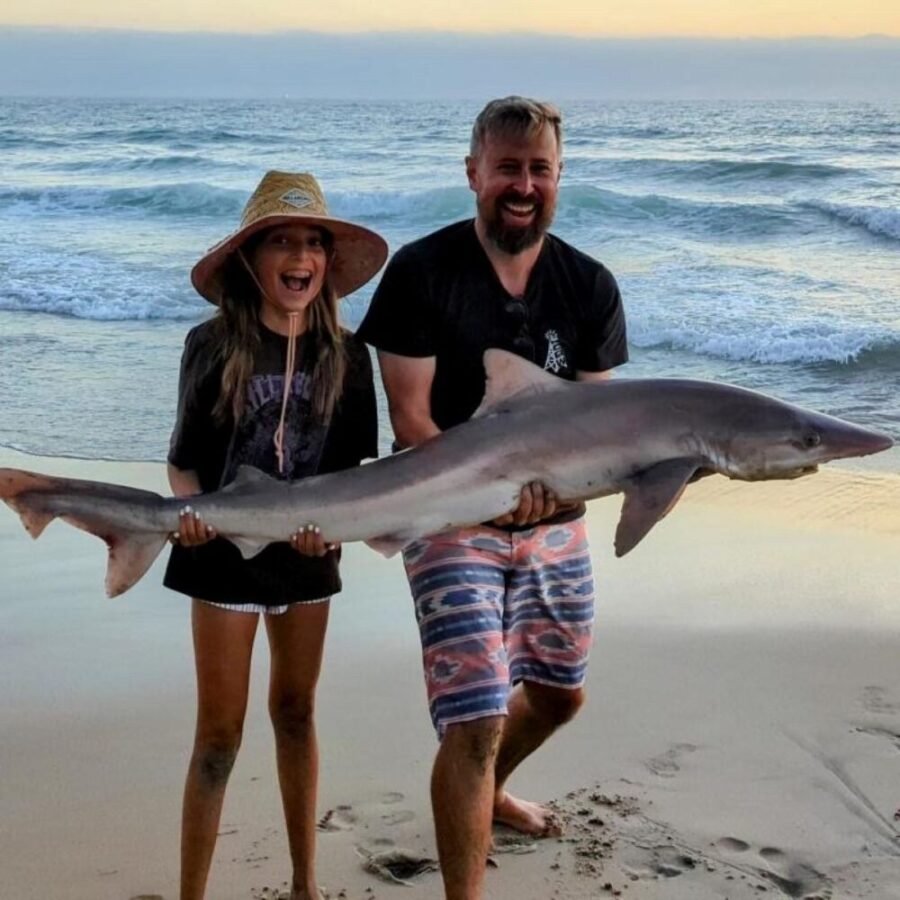
This is a follow-up to my original article published June 20, 2026 – California to Ban Shark Fishing As We Know It. Since then I’ve spoken directly with Craig Shuman, CDFW’s Marine Region Manager, watched the June 17 Commission hearing, reviewed the official CDFW presentation given to the Commission, and corrected several factual errors from my initial reporting. Western Outdoor News picked up the original article, which tells me this issue is resonating with anglers well beyond San Diego. This piece reflects everything I now know.
The Regulation — What It Says and What It Does
On June 17, 2026, the California Fish and Game Commission voted unanimously to approve an emergency regulation amending Sections 28.06 and 28.65 of Title 14, California Code of Regulations. The regulation doesn’t explicitly state a California shark fishing ban, but it bans the necessary gear to effectively target sharks – wire or metallic leader and hooks larger than 1.5 inches in inside measurement when fishing within 1,000 yards of shore in ocean waters from Pigeon Point south which is essentially the entire Southern and Central California coastline.
One thing that wasn’t clear to me when I first read the notice, but became clear after speaking with a representatives of the Commission and watching the June 17 hearing, is that this measure is not solely about great white sharks. The Commission’s stated intent is broader: they want to stop shore-based anglers from hooking and fighting any shark large enough to pose a potential risk to a nearby swimmer.
White sharks are protected and already illegal to target – that law hasn’t changed. What this regulation adds is a de facto end to the shore-based fishery for every other large shark species that swims this coast. Sevengill sharks. Thresher sharks. Mako sharks. None of these are white sharks. All of them are currently legal to catch and release. And all of them can no longer be realistically targeted from shore without the wire leader this regulation bans. That’s not a side effect of the regulation. Based on what the Commission has communicated, it appears to be at least part of the intent.
The regulation is expected to go into effect around July 4, 2026. Once effective it runs for 180 days before being reassessed. That 180-day review window is an important detail for California anglers.
Correcting My Initial Errors
My original article had several inaccuracies I need to own before going further.
There was a public hearing. I implied the regulation passed with no public input opportunity. That was wrong. There was a public hearing at the June 17 Commission meeting. You can watch it here: California Fish and Game Commission June 17, 2026 — CAL-SPAN, Item 6.
The 1,000-yard scope. I initially said the regulation applied to all ocean waters. The correct scope is within 1,000 yards of shore. This is still essentially every surf fishing location in Southern California, but I should have gotten it right the first time.
Shark Stewards did not write this regulation. CDFW’s Craig Shuman was clear that this was a CDFW and Commission-driven response to documented incidents, not a Shark Stewards initiative. I stand by the fact that Shark Stewards publicly praised the measure and pushed for even broader restrictions – that’s their own stated position – but the origin of the regulation itself was internal to CDFW.
Those corrections matter because accuracy is the foundation of a credible argument. Now let me tell you what I learned after those corrections that makes this situation considerably more troubling, not less.
How This Regulation Was Born – 72 Hours
After watching the full June 17 hearing and speaking with Craig Shuman, I now understand how this emergency regulation actually came together. Craig described it himself.
It started with a message from a friend and fellow fisherman. A great white shark had washed up dead from a fishing-related injury, and the message to Craig was essentially: when are we going to do something about this? Around the same time, Craig read a forecast projecting a strong El Niño this summer, which historically increases the number of juvenile great white sharks near shore in Southern California.
He decided to act. He called a few people. And according to what was described, the core emergency package came together in approximately 72 hours.
Seventy-two hours to construct a regulation that affects the fishing practices of tens of thousands of California anglers along the entire Southern and Central California coast.
That’s not a criticism of Craig’s intentions. After speaking to Craig, I feel confident that he is well-intentioned and that he’s fighting through a lot to keep fishing accessible to us as anglers. For that, I am very grateful to Craig Shuman and the entire commission and we all should be.
A dead white shark with fishing-related injuries is a real problem. Increases in juvenile great white activity near crowded beaches driven by El Nino. is a real concern. But seventy-two hours to draft a coastwide gear restriction, with a select outreach list, a single Commission hearing, and four speakers – all of whom supported the measure – is not a process that seriously considered the full range of people this affects.
The Outreach List – Who They Called and Who They Didn’t
The official CDFW presentation given to the Commission on June 17 lists the organizations contacted during outreach:
- All Waters
- California State University Long Beach Shark Lab
- California Surf Fishing
- Coastal Conservation Association California
- Coastside Fishing Club
- Fish On
- Golden Gate Fishermen’s Association
- Sportfishing Association of California
Eight organizations. And at the hearing itself, four speakers called in with public comment. All four supported the measure. The Commission cited broad support from “those they reached out to” as a factor in moving forward.
Here’s what I want you to understand about that list.
Not one of those organizations represents the surf angler specifically targeting leopard sharks, soupfin sharks, or other smaller coastal shark species from the beach. The outreach focused heavily on organizations associated broader sportfishing interests. The people most directly and specifically impacted by a wire leader ban for smaller coastal shark species – the surf fishing community that has built a responsible, sustainable catch-and-release fishery around these animals – was not at large made aware of this.
The Commission’s presentation acknowledged that this regulation would affect a “small group” of anglers targeting soupfin and sevengill sharks from shore. That framing is wrong in two directions. First, it misses an entire fishing community that regularly targets leopard sharks, a species whose interactions with this regulation were apparently never considered – not to mention the larger species of sharks that it affects. Second, by limiting outreach to a select list and holding a hearing with four supporting speakers, they painted a misleading picture of how “small” this group of affected anglers really is.
I know how large it is. After my original article ran, the response I received from anglers across Southern California was overwhelming. These people exist. They fish legally and responsibly. They were not reached out to. They were not at the hearing. They had no idea this was coming until the vote was already done.
What the Presentation Said – and What It Didn’t
The emergency was justified by these conditions:
- Increasing reports of juvenile white sharks near shore
- 20 sharks hooked in a single day at Hermosa Beach Pier
- At least 3 hooked sharks killed this year
- The 2014 incident in which a swimmer was bitten by a shark that had been hooked by a pier angler
- A forecasted El Niño expected to increase water temperatures and white shark presence
Those are real facts. I don’t dispute any of them.
What the presentation doesn’t contain: any analysis of the downstream impact on leopard sharks, soupfin sharks, sevengill sharks, or any other species affected by this regulation. No examination of what happens to those fish when wire leader is removed from the equation and break-off rates increase. No consideration of the scale of the responsible catch-and-release fishery that targets these species from shore. No attempt to quantify how many anglers would be affected beyond characterizing them as a “small group.”
They built the case for the regulation entirely on the problem side of the ledger. Nobody was in that room to put numbers on the cost side.
What Actually Happened at Hermosa Beach
Two incidents set this in motion.
On April 1, 2026, a 20-year-old named Kevin Phan accidentally hooked a juvenile great white from the Hermosa Beach Pier, ran down to the beach, waded in, and physically freed it. The video went massively viral. That created the cultural moment that put white shark interactions at SoCal piers in front of millions of people.
Ten days later, a group of five anglers arrived at the same pier at 6am with whole mackerel on 1.5-inch hooks and proceeded to hook more than 20 sharks over the course of the day. They claimed they were makos. A nationally recognized shark expert who examined photos said at least some appeared to be juvenile great whites. The anglers were cutting lines instead of properly releasing the fish — and those cut lines, leaving hooks and monofilament attached to the sharks, are what resulted in the fishing-related shark deaths that triggered Craig Shuman’s call to action.
Here’s the part that doesn’t get examined enough: those anglers were cutting lines. Not because they had wire leader. Because they were on a pier with no way to properly land a large shark and were choosing the fastest way to end the situation. That behavior exists independently of gear type. Banning wire leader doesn’t change the decision to cut a line. It doesn’t prevent the hookup. It doesn’t always prevent the shark from being brought to the surface. It doesn’t prevent the line from being cut.
What banning wire leader does change is what happens for the thousands of responsible surf anglers targeting leopard sharks and soupfins with proper tackle and genuine intent to land and release. For those anglers, removing wire means more break-offs, more fish swimming away with hooks and trailing monofilament, and more fishing-related injuries to the very shark populations the Commission says it’s trying to protect.
The mechanism the regulation relies upon doesn’t connect to the problem it claims to solve. And it creates a different, larger problem for a fishery it never seriously examined.
The Peak Season Insult
One more thing that deserves to be said plainly.
The Commission justified the urgency of this emergency action partly on the grounds that summer is peak season for juvenile great white activity near shore. That’s accurate. Summer is also peak season for leopard sharks, soupfin sharks, and many other legally fishable species in Southern California waters. These species are at their most active, most catchable, and most present in the surf zone during exactly the period this regulation covers.
So the Commission is saying: because this is the most important time of year for great white management, we need to act immediately. And the consequence is that the most important time of year for a legal, sustainable fishery in the same waters gets shut down by the same action. Not incidentally, not as a reluctant trade-off acknowledged and weighed – just as an unconsidered side effect of a regulation drafted in 72 hours.
You are not a side effect. This fishery is not a side effect.
The Wire Leader Issue – From Someone Who Actually Fishes This Way
I fish for leopard sharks and soupfin sharks from the surf year-round. In a typical year I hook around 50. In strong years I’ve topped 100. Every single one of them has been released carefully and safely. I have never targeted a white shark. I have never come close to landing one.
I did hook one, once, by accident. I knew immediately because it went halfway airborne. It rubbed through my mainline, not my wire leader, in about 15 seconds. My gear was so far below what that fish required that the interaction resolved itself almost instantly. That’s not an argument. That’s a data point. The gear I use for leopard sharks cannot land a great white. I proved it without trying to.
Wire leader is what allows me to land the fish I am actually targeting. Leopard sharks and soupfin sharks have teeth and rough, abrasive skin. They roll and thrash in a fight, and that skin saws through monofilament regularly. Without wire, more fish break off. More fish swim away with hooks in their mouths and line trailing behind them. More fish experience the fishing-related injuries the Commission says it’s trying to prevent – just in species that nobody in that Commission meeting was counting.
The Hook Size Restriction – Getting Worse for the Fish
The 1.5-inch maximum hook size gets less attention than the wire leader ban but deserves some.
My 7/0 to 9/0 circle hooks for leopard sharks and soupfins are smaller than the new limit. But anglers targeting sevengill, thresher, and mako sharks need larger hooks appropriate to those fish. Undersized hooks on large sharks dramatically increase the likelihood of gut hooking and deep hooking – the outcomes that properly sized circle hooks were specifically designed to prevent. A regulation framed as reducing shark harm makes shark harm more likely for every angler targeting larger legal species from shore. It also makes it more dangerous for angler unhooking caught sharks.
The Compromise Discussion — And Why I’m Still Not Satisfied
In my conversation with Craig Shuman, we discussed whether there’s a more targeted approach. One idea: instead of banning wire leader entirely, establish maximum leader length and strength limits. A short, lighter wire leader is sufficient for leopard sharks and soupfins but doesn’t provide the heavy terminal tackle associated with intentional white shark targeting.
I want to be clear about where I stand. I don’t love this compromise. Any discussion of a more refined rule is worth having, but it has to happen with genuine, open outreach to the full community of affected anglers – not a short call list that produces four supporting voices and a unanimous vote.
My baseline position remains: every shark species with a healthy and sustainable population should remain a legal target for California anglers. The burden is on CDFW to demonstrate with actual data why that should change, and to design regulations that are proportionate to documented problems rather than convenient to write quickly.
Our Right to Fish – And the Pattern We Need to Recognize
California’s constitution guarantees the people the right to fish. The state can regulate fishing for genuine conservation and safety reasons, and that authority is real and legitimate. But the process by which a regulation gets made matters as much as the regulation itself.
This regulation was assembled in 72 hours. Outreach went to a pre-selected list of organizations. Public comment at the hearing came from four speakers, all supportive. The affected community – surf fishing anglers targeting smaller coastal shark species – was characterized as a “small group” that apparently wasn’t worth reaching out to directly. The vote was unanimous.
The people who call in to Commission hearings in support of measures like this are organized. They know when the meetings are. They have relationships with agency staff. They are ready to speak.
Most of us who fish legally and responsibly for leopard sharks and soupfins on the beach at 5am had no idea this was happening. We only learned about the regulation after it passed. The response I got from other anglers after my article ran tells me I was not alone. There is a large, engaged community of responsible shore anglers in California who were simply not in the room – not because they didn’t care, but because nobody told them there was a room to be in.
That’s not a process that represents the people it affects. And once a restriction like this is in place, even temporarily, the history of California fisheries regulation (and politics in general) suggests it is far more likely to be expanded than reversed.
What Comes Next – The Meetings You Need to Be At
The regulation goes into effect around July 4, 2026. It runs for 180 days. That 180-day window closes in late December 2026, meaning the Commission will decide whether to let it expire, extend it, or make it permanent at their December meeting.
Every meeting between now and then is an opportunity. Every Marine Resources Committee meeting is where the shark regulation and MPA discussions live. Every full Commission meeting is where votes happen. The people who show up consistently are the people who influence outcomes. The ones who don’t show up don’t get to complain when the access they took for granted is gone.
Here is the full remaining 2026 Commission meeting schedule. All meetings are open to the public and can be attended in person, by webinar, or by phone. The join instructions are posted to the Commission website before each meeting. Subscribe at fgc.ca.gov so you get those notices directly.
Full 2026 Remaining Meeting Schedule – fgc.ca.gov/Meetings/2026
| Date | Meeting | Why Anglers Should Care |
|---|---|---|
| July 16, 2026 | Marine Resources Committee | The shark regulation review — this is the most urgent meeting on this list. Show up. |
| August 11, 2026 | Tribal Committee | MPA petition discussions related to tribal access and coastal fishing areas |
| August 12-13, 2026 | Full Commission Meeting | Major decisions meeting — shark regulation status, MPA petitions, general fisheries issues |
| October 14-15, 2026 | Full Commission Meeting | The 180-day shark regulation review window closes around this time |
| November 12, 2026 | Marine Resources Committee | Marine fishing regulations and MPA updates |
| December 14, 2026 | Tribal Committee | Continued MPA and tribal access discussions |
| December 15-16, 2026 | Full Commission Meeting | Year-end decisions |
All meetings are held at the California Natural Resources Headquarters Building, 715 P Street, Second Floor, Sacramento, CA 95814, with remote participation available.
The MPA Threat – Why This Goes Beyond Shark Fishing
While the shark gear restriction is the immediate fight, it’s not the only one. If you haven’t been paying attention to the MPA petition process already underway in California, you need to start now.
Marine Protected Area expansions are already in motion. The Commission held a series of regional MPA petition hearings earlier this year – in April for Northern California, in May for San Luis Obispo through Santa Barbara and the Channel Islands, and in May for Los Angeles through San Diego counties including Santa Catalina Island. These petitions, if approved, would expand no-take and restricted-take zones along significant stretches of California’s coastline.
What does that mean for surf anglers specifically? Expanded MPAs can close access to productive fishing areas entirely, restrict specific gear types or species, and permanently reduce the coastline available to anglers who fish from shore. Boat anglers can move to find fish. Shore anglers are stuck fishing wherever the law allows.
The same pattern that played out with the shark regulation – a relatively fast process, a select outreach list, organized conservation voices at the table, and a fishing community largely unaware it was happening – is exactly how MPA expansions have historically moved forward in California. The difference this time is that you now know the pattern. You know the meeting schedule. You know how to show up.
If you fish Southern California beaches and don’t want to see more of them turn into no-fishing zones, July 16 is where it starts. Subscribe to the mailing list. Show up. Keep showing up.
How to Participate – Step by Step
Step 1 – Subscribe right now – Go to fgc.ca.gov and sign up for the Commission mailing list. You will receive meeting agendas and announcements directly. You should never again find out about a regulation that affects you after it has already been voted on. Direct subscription link: https://public.govdelivery.com/accounts/CNRA/signup/35154
Step 2 – Mark every California Commission meeting on your calendar.
Step 4 – Attend and submit public comment – You do not need to travel to Sacramento. Every meeting has a remote participation option — by webinar or by phone. The join instructions are in the agenda documents posted before each meeting. When public comment opens, say your name, say you’re a California angler, and share your experience in two minutes or less. Numbers matter: how often you fish, how many fish you release, how many years you’ve fished this coast. Be factual, be specific, be brief, but be smart.
Step 5 – Get other anglers to join – The Commission heard four speakers on June 17. All four supported the regulation. The number of anglers who show up at July 16 and every meeting after that will communicate something about whether this community is organized enough to take seriously. Share this article. Tell your fishing partners. Get people on the mailing list
Thank you, Nick.
Thanks, Nick. Very grateful for your efforts and your site’s wonderful information. I’m from out of state and have a family trip planned in a few weeks. Surf fishing is a big part of that, and I’ll be going after leopard sharks based off everything I’ve learned from your articles. To steer clear of the wire leader ban, what pound mono or fluoro would you suggest?
Thanks for the support! I’m still working through that and haven’t tested it quite yet as I haven’t heard any word on the wire ban going into effect. I would assume at least 100lb maybe 150 or more.