November Surf Fishing Report – The Season That Never Turned
This November surf fishing report starts where my August report left off: the worst surf fishing season I have had in 12 years on this coast. The honest update is that it has only gotten worse since then, on all fronts.
The August report ended on a hopeful note. The forecast was showing the most stable, fishable stretch of the year, August 1st through the 13th, and I wrote that if there was any chance of the delayed peak season finally showing up, that was it. It did not happen. September and October stayed rough, the bite stayed down, and the turnaround we spent all summer waiting on never came.
This November surf fishing report covers how the year has gone, what the fishing has looked like since August, and what to expect as we head into winter with a historic El Niño peaking, water temperatures that never cooled down, and Kelvin waves pushing sea levels higher than we have seen in years.
How the Year Has Gone
May started with real optimism. The shark fishing was phenomenal, I had a day with nine leopard sharks across two guided sessions, and the halibut bite was decent. Light tackle was slow, but that’s normal for May some years. The water was right around 65 degrees and it felt like the season was about to open up.
Then the swell arrived in the last week of May and never really left. June was defined by it. A big south-southwest swell peaked on June 11th, eased for a few days, then came right back up to 4 to 6 feet through June 21st. Light tackle stayed slow, lure fishing got harder, and the only thing that kept producing was the shark bite.
July gave us the first real signs of life. The surf calmed down from the brutal June stretch, spotfin croaker showed up in 3 out of 4 consecutive sessions, and corbina started appearing with more frequency. Water pushed past 70 degrees and kept climbing. The bite was still behind pace, but the trajectory finally pointed up.
August is when I had to call it what it was. The rough surf that plagued us through May and June had carried straight through July with barely a break, the most consistently elevated surf I have experienced in 12 years. Light tackle was running at about half of what a typical July produces. The one bright spot was quality. There were some very large corbina and spotfin croaker in the shallows for anglers willing to put in the time to find them.
And then September and October made it worse. The stable window in early August did not turn into the delayed peak season. Conditions stayed elevated, the bite stayed inconsistent, and every style of fishing felt it. Leopard sharks remained the exception, and even that bite got spottier as fall went on. This is the first season in 12 years where I cannot point to a single stretch and say, “that was the good fishing’.
2026 vs 2025: The Comparison
Last year was a normal season. This year was not. Here is the side by side, from my own reports.
| 2025 | 2026 | |
|---|---|---|
| Surf | Calm and mellow all summer, low and manageable through August and September | Relentlessly elevated since late May, the most consistently rough surf in 12 years |
| Water temp | Peaked near 70 in August, cooled to 67 by September | Hit 70 in August and never cooled, still 75 in November |
| Light tackle | Peak season, hot bite, perch about half the catch with croaker and corbina heavily mixed in | About half (maybe a third) of normal quantities in summer, worse since August |
| Lure fishing | Prime time, halibut, white seabass and calico all feeding in spring through early summer | Halibut down from normal, the seabass bite never materialized |
| Sharks | Peak season, 70 to 80 percent success on good days | Actually a better start at 90% through early June and then spottier as the season progressed |
| Sand crabs | In force all summer, full range of sizes, no backup bait needed | Never established |
Water Temperature
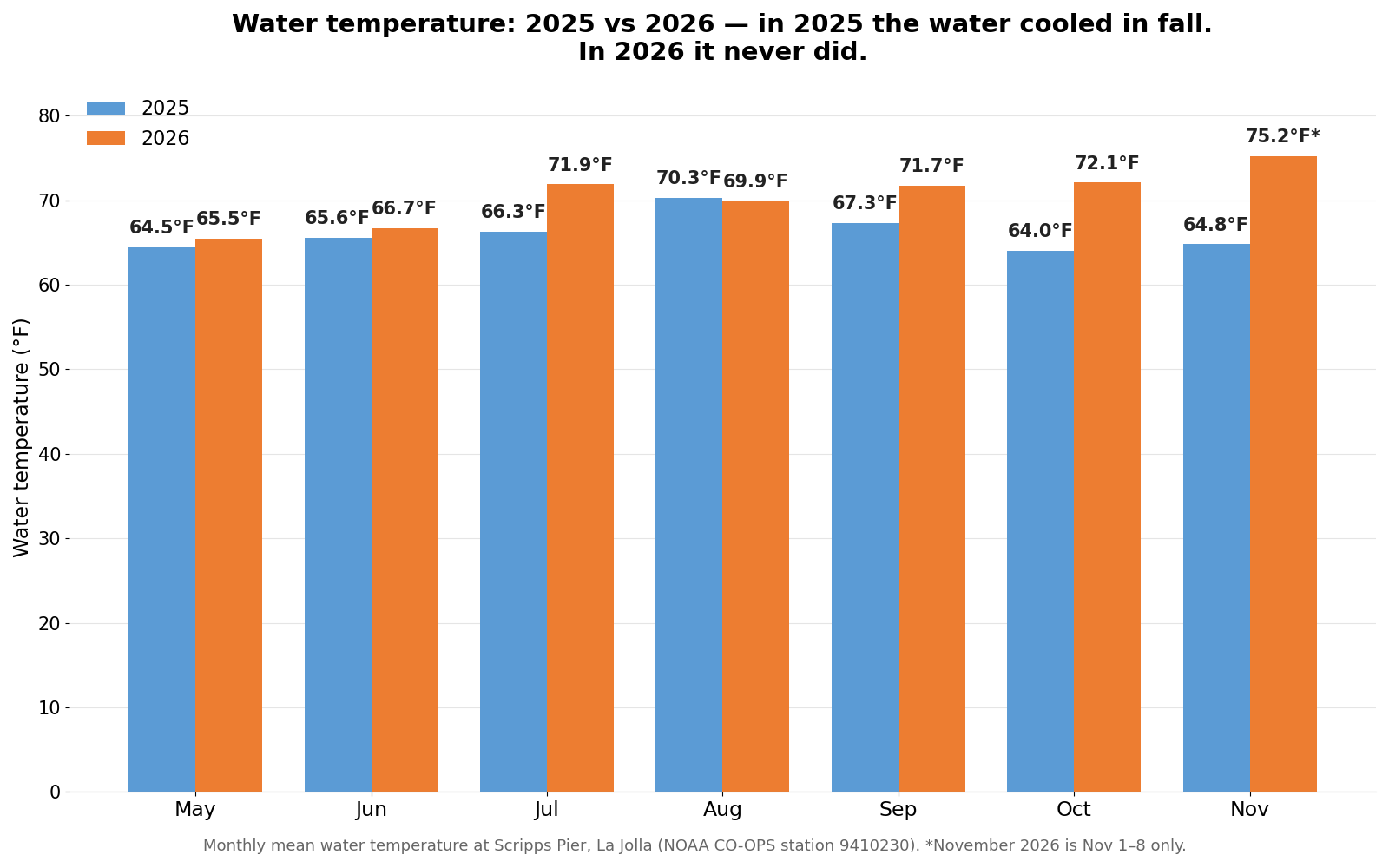
The water temperature line is telling – but it isn’t the whole story. In a normal year, the water peaks in August/September and cools through September and October. That cool down can turn on a little fall bite especially for lures but still the spring/summer is usually the best time of year. This year, there was no cool down even through early November. Scripps Pier is reading 75 degrees in November. That is summer water in November, and it’s the El Niño signature playing out exactly as expected.
What’s Been Biting
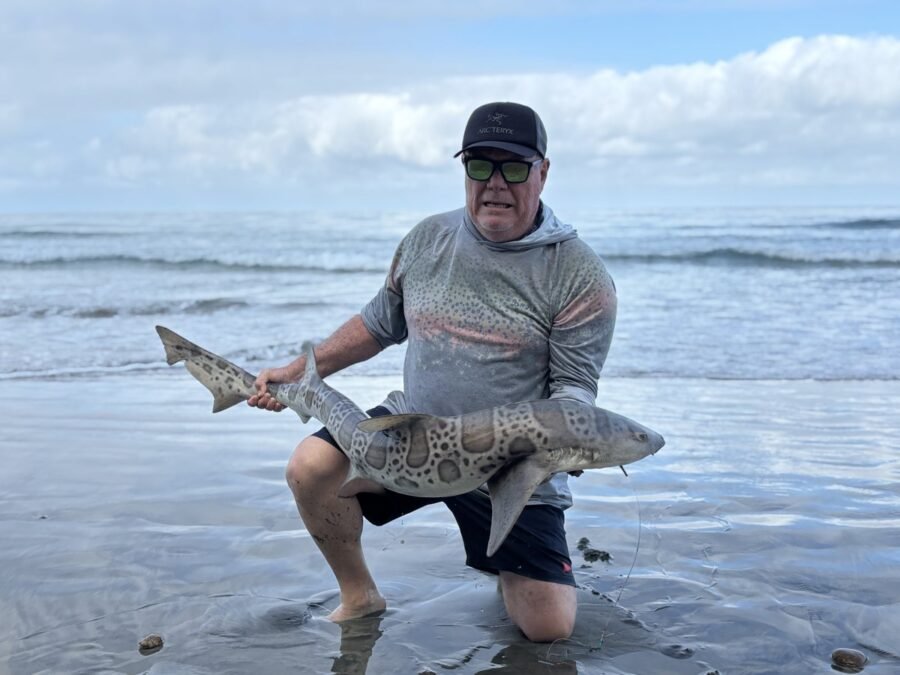
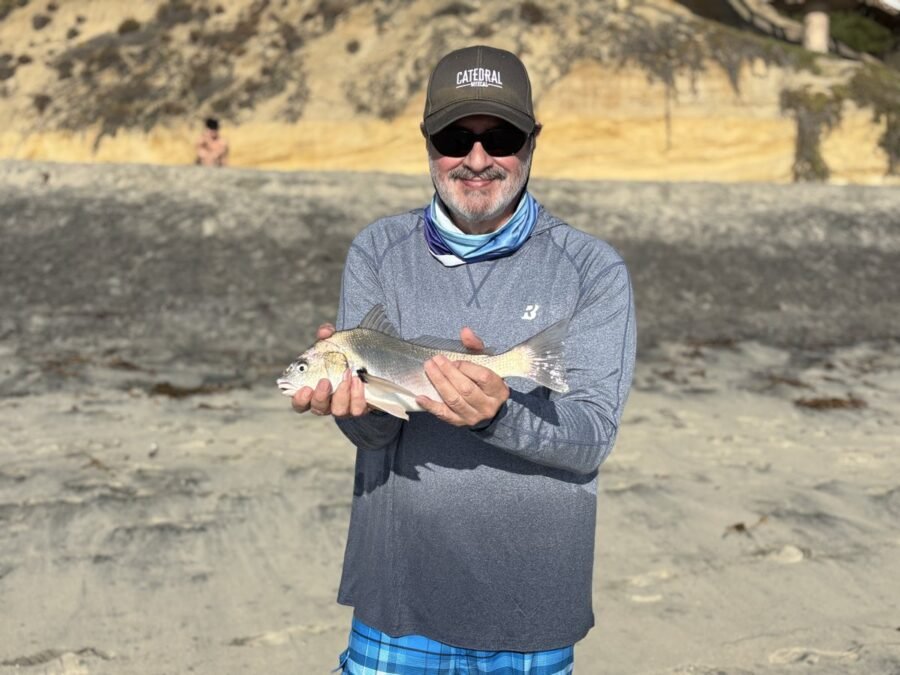
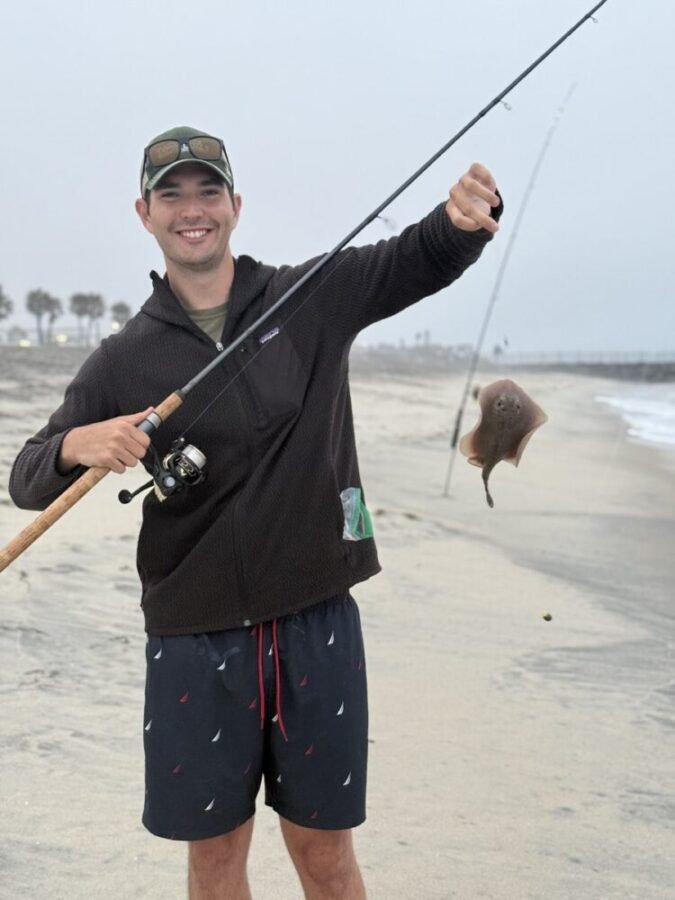
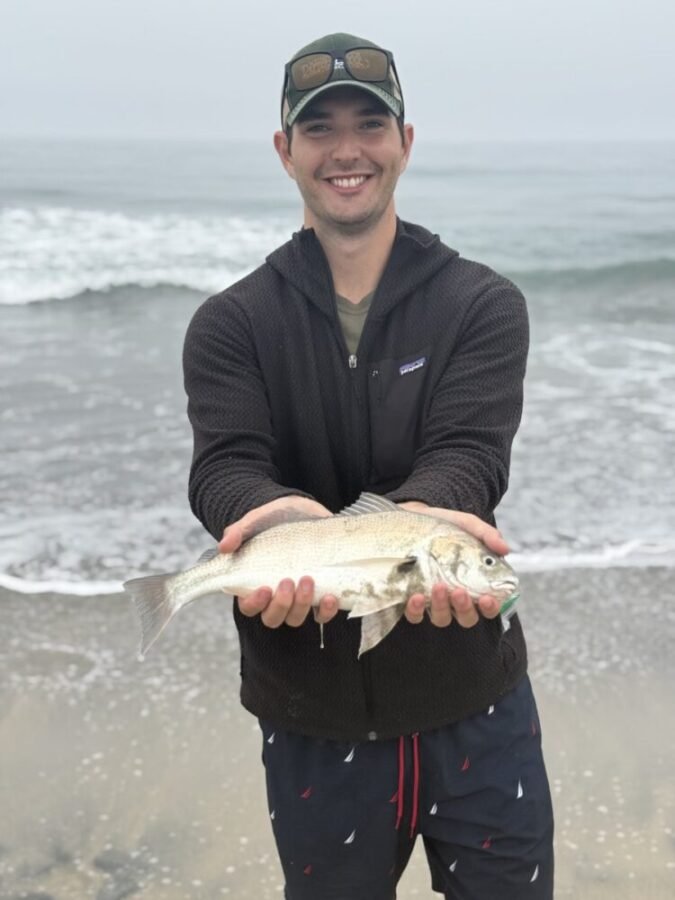
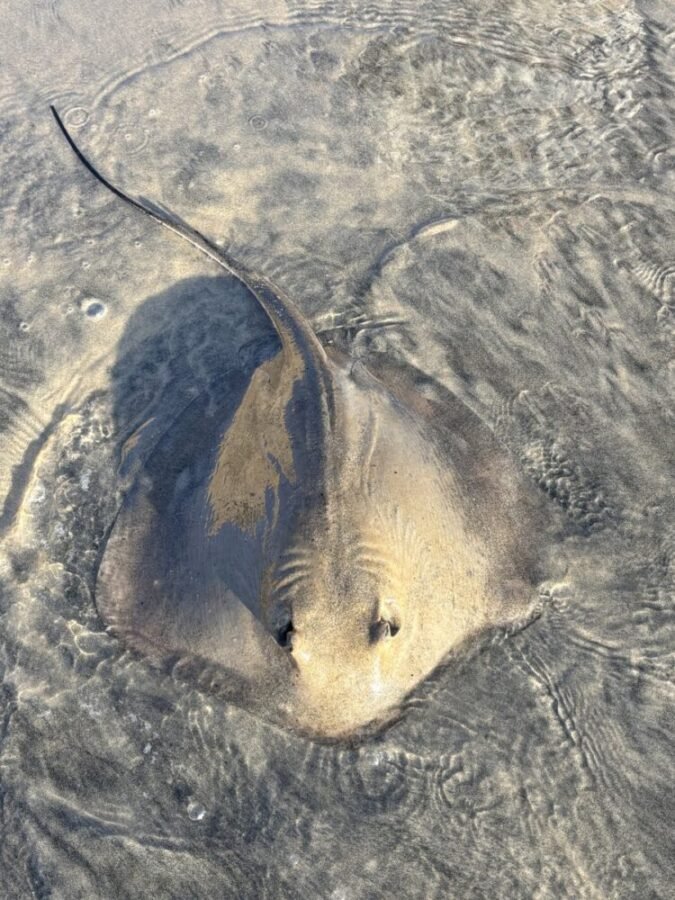
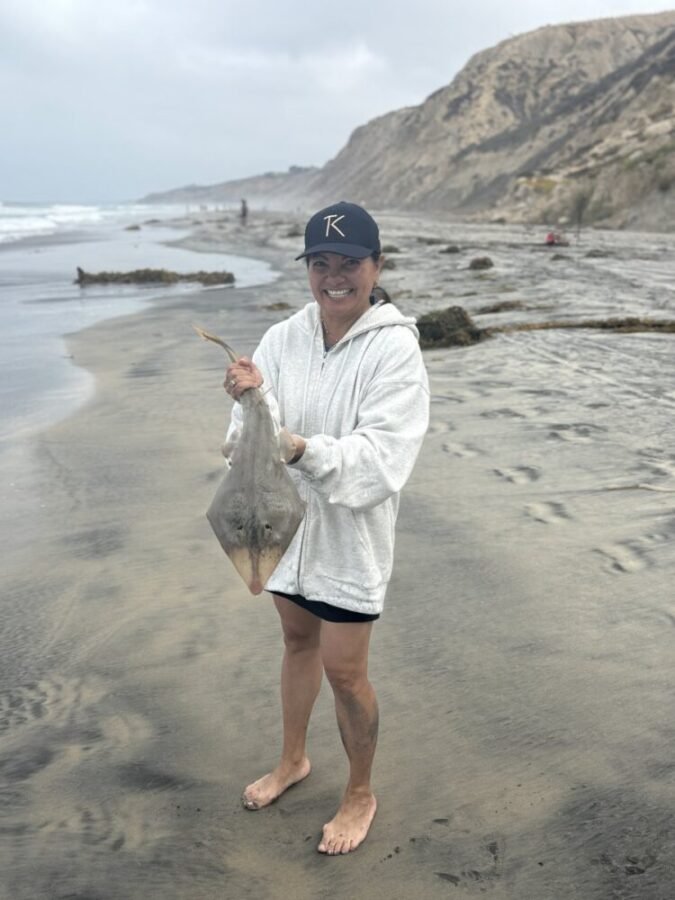
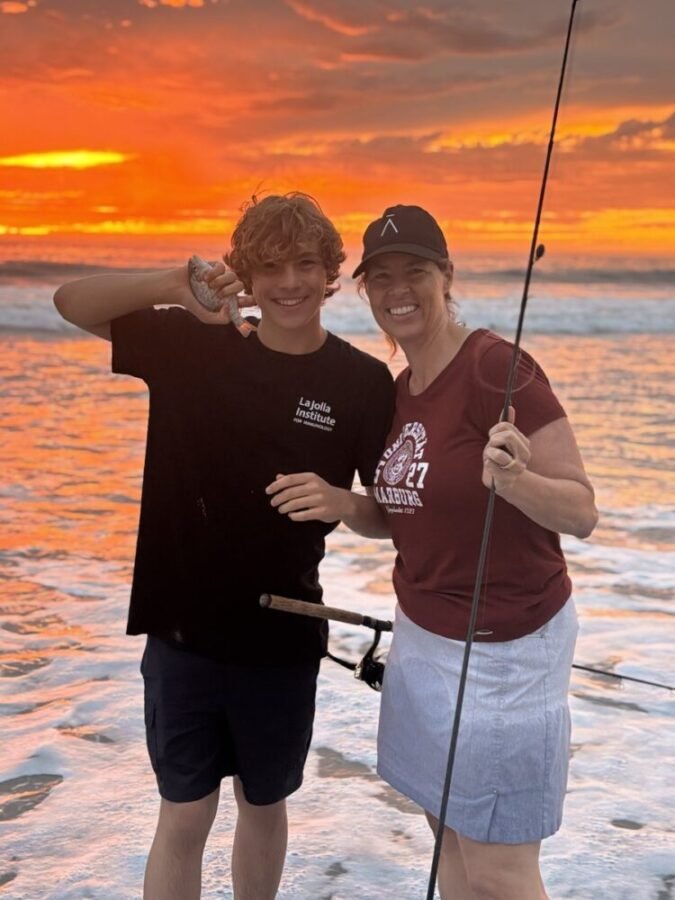
All of these photos are from the last few months, since the August report. I did not write a report for September or October, so this November surf fishing report covers what has been caught in that stretch. I fished twice in the month of October – skunking both times.
Light Tackle
Surfperch remain the most consistent thing out there, and that has been true all season. They are the fish that kept sessions from being total skunks when everything else went quiet… and that’s not saying much.
Corbina and spotfin croaker are still around, and the quality is still there – just not much of it and even less than there was in August. The very large fish I wrote about in August are extremely difficult to find now. Additionally, rough surf, strong current, and dirty water make it hard to present a bait cleanly and hard for fish to find it.
Lure Fishing
Lure fishing has been the biggest disappointment of the fall. Halibut are still out there for anglers covering water and fishing structure, but the numbers are down from what a normal fall delivers. The cooler water that usually sharpens the halibut bite in September and October never arrived, and the bite has stayed soft.
White seabass are the bigger story. The bite simply never materialized, and it has not shown up in the fall either. This is likely tied to the same combination of high surf and warm water affecting the rest of the inshore fishery – along with the lack of upwelling and nutrients in the shoreline water. It may simply be too warm for seabass to turn on the way they normally do.
Calico bass are still a viable target around structure, and they are one of the species to lean on as we move into winter.
The Kelvin tied has added to the pain as lure anglers seek out those 0 to negative tides which simply haven’t been the same due to a seemingly additional 1 to 1.5 ft of warm water sitting ontop of our normal tidal levels – making a tide that shows 0 ft more like a 1 to 1.5 ft tide.
Sharks
If you have been frustrated with this season, shark fishing has been the saving grace, and that is still true. Leopard shark fishing was phenomenal through the summer. It’s still doable this time of year, but not great. May gave us the nine fish day, but the bite has gotten spottier since then, which is normal as the season winds down, but even that deteriorated quickly.
Soupfin sharks have been caught with less frequency this year than in recent seasons, but they are around. Bat ray activity picked up noticeably over the summer.
A note on leaders: with wire leaders now prohibited within 1,000 yards of shore under the current California emergency regulation, 200lb mono is the go-to inshore leader material for shark fishing. My pre-made 200lb mono shark leaders are the exact leaders I use on every guided session and every personal session.
Sand Crab Update
Sand crabs tell the story of this season as well as anything. By June, you could show up and find them – but it would take some time. It never opened up like a true summer does.
By July, the beds were increasingly inconsistent, mostly small crabs, and nowhere near the reliable abundance we saw this time last year. August was same as July and by September… mostly baby crabs with usable beds few and far between. The persistent swell has been moving sand on and off the beaches instead of letting it settle, and the elevated water temps have not helped.
The situation has not recovered this fall. Bring backup bait. Mussel meat, gulp sand worms, blood worms, lug worms and squid along with other options still work.
Conditions Report
Water temperature is sitting at 75 degrees at Scripps Pier right now. That’s roughly 10 degrees above normal for this time of year, and the species list is starting to match it.
Surf has stayed elevated. The swell pattern that defined the summer has not let up, and a significant swell is arriving Monday that will push exposed beaches into the 5 to 8 foot range. Saturday and Sunday are fishable, Monday is not the day to plan around.
There is another factor pushing water levels up that most anglers have never heard of, and it is going to matter all winter. Kelvin waves, slow bulges of warm water driven by this El Niño, are running up the California coast and raising sea levels 6 to 18 inches with each one. I wrote a full breakdown of what they are and what they mean for surf fishing here: Kelvin wave article.
Sea levels along our coast are already running 1 to 2 feet higher than last winter, and they are expected to stay that way through the season. When that elevated base water meets the king tides coming November 24th through 26th, December 23rd through 25th, and January 21st through 22nd, high tides are going to push further up the beach than most anglers are used to. Plan your access and your timing accordingly.
What to Expect This Winter
Surfperch season is the bright spot. Barred and walleye surfperch peak from November through April, and the best big perch fishing of the year typically runs January through March. Perch have been the most consistent fish all season, and winter is their time. If you only fish one style this winter, fish light tackle for perch.
Warm water species may hang around later than usual. Corbina and croaker normally thin out as the water cools, but the water is not cooling. Do not be surprised to find them in the shallows well into the fall. They will not be at peak season numbers, but they will be there.
El Niño is peaking right now and is expected to stay strong through January to March 2027. El Niño winters tend to send stronger storms toward California, which means bigger surf. Expect more elevated surf days and fewer clean windows. Fish the windows when they come. My forecast tool tracks conditions across all 58 beaches so you can pick the day and the beach instead of guessing: surf fishing forecast.
Kelvin waves will keep coming, three or four more are expected before this El Niño ends, and each one will push water levels up again. Watch the tides, especially around the king tide dates.
Final Thoughts on This November Surf Fishing Report
This November surf fishing report covers the most challenging surf fishing season in my 12 years on this coast. The surf never settled, the bite never turned on the way it should have, and the delayed peak season we spent all summer waiting for never arrived.
Follow along on Instagram and YouTube for real-time session updates from the beach. Fished recently? Drop your report in the comments. Always good to hear what others are finding out there.