Best Braid Fishing Line for Surf Fishing (2026 Guide)
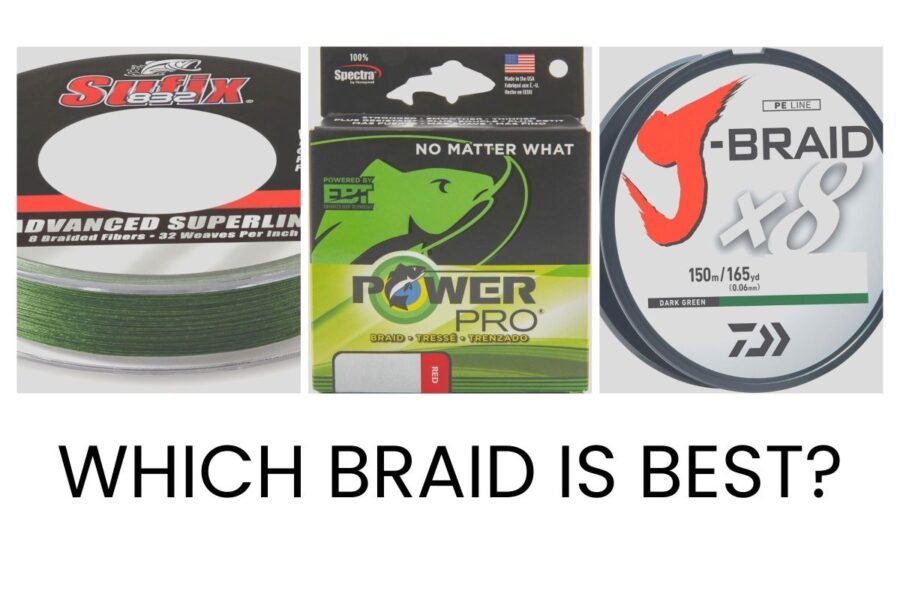
There’s nothing worse than showing up to perfect conditions, wading out, casting out, and having your first cast end in a tangled disaster. You spend twenty minutes picking apart a wind knot the size of a marble, eventually give up, cut it off, and then realize you don’t have enough line left to re-spool on the beach. Session over before it started.
Line choice matters more than most surf anglers give it credit for. The right braid for your setup means longer casts, better sensitivity, and far fewer of those beach-side nightmares. But braid isn’t always the answer for every application, and anyone who tells you it is has never handed a spinning rod to a ten-year-old on a windy San Diego morning.
Here’s a full breakdown of what actually works in the surf… including when to skip braid entirely.
Braid vs. Mono vs. Fluoro: Which One Belongs on Your Surf Reel?
Before we get into specific braids, it’s worth being honest about something: braid is not the universal answer for surf fishing. The right line depends entirely on what you’re fishing for, who you’re fishing with, and what conditions you’re dealing with.
Monofilament is forgiving. It stretches, which cushions the fight against a hard-running corbina or a line-spool of surfperch. It’s easy to handle, easy to untangle when a beginner gets into trouble, affordable enough to replace without thinking twice, and it ties simple knots. It’s what generations of surf anglers grew up on, and it still does the job. For light tackle surf fishing targeting corbina, surfperch, and croaker, a 15lb mono mainline with a 2-3-foot fluorocarbon leader is hard to beat — especially if you’re running multiple rods or fishing with friends or kids who are new to the sport. When someone gets a spool all knotted up beyond saving, you replace it in two minutes and get back to fishing. Try doing that with premium braid.
Fluorocarbon is nearly invisible underwater, has low stretch, and is excellent as a leader material. It’s not a practical mainline choice for surf fishing as it’s too expensive, too stiff in heavier tests, and unnecessary as a main line when you’re fishing sandy beaches.
Braided line is where it gets interesting. No stretch means every tap, tick, and bump transmits directly to your hand. This is critical for detecting soft halibut bites and even in putting the proper action on your lures. Thin diameter gives you casting distance and line capacity. It lasts far longer than mono on the spool. And in clear SoCal water where fish are pressured, the ability to use a heavier braid with a lighter, invisible fluorocarbon leader gives you the best of both worlds. For more on braid vs mono, visit my article on that.
Here’s how to think about it by setup:
| Setup | Mainline | Leader | Why |
|---|---|---|---|
| Light tackle — corbina, surfperch, croaker | 15lb mono | 15lb fluoro | Forgiving fight, beginner friendly, easy to replace |
| Jerkbaits — halibut, surfperch | 20-30lb braid | 2-30lb fluoro | Sandy beaches, some structure, sensitivity for soft bites |
| Swimbaits — halibut, WSB, calico | 20-30lb braid | 20-30lb fluoro leader | More structure, bigger fish, casting distance matters and so does retrieve sensitivity |
| Sharks and rays | 50lb braid + 25-50yd 80-100lb mono topshot | 90lb wire | Capacity, shock absorption on powerful runs, abrasion resistance near shore |
What to Actually Look for in Braid For Surf Fishing
When it comes to choosing braid for surf fishing, there are a lot of opinions out there. Most of it comes down to personal preference, but there are a few things that consistently matter more than anything else.
Here are the five things I pay attention to when selecting braid for the surf.
1. Durability
First and foremost, the line needs to hold up.
Surf fishing is tough on gear. You’re dealing with sand, saltwater, structure, and constant casting. If your braid frays easily or breaks down quickly, it’s going to cost you fish.
Some braids hold their integrity much better over time. Others start to get fuzzy after a couple sessions. That fraying weakens the line and makes it more prone to failure, especially around structure or when fighting bigger fish.
A durable braid should stay tight, round, and consistent even after repeated use.
2. Tangle Resistance
This is a big one, regardless of your reel type. One thing that doesn’t get talked about enough is that mono and fluorocarbon tend to tangle less because they have memory. They want to coil back into shape, which actually helps prevent certain types of knots and line issues.
Braid has almost no memory, which is great for casting and sensitivity, but it also means it can get messy if it’s not managed well.
In my experience, the braids that feel like thin rope tend to tangle more. They’re soft, limp, and can dig into themselves on the spool or create wind knots more easily. Sometimes this means trading a bit of distance for less tangles.
On the other hand, smoother braids, especially coated braid, tend to behave better. They have a slightly stiffer feel and a bit more structure, which helps them come off the spool cleaner and reduces tangles.
If you fish in wind or deal with a lot of current, this becomes even more important.
3. Casting Distance
Casting distance still matters, especially in the surf.
A good braid should come off the spool clean and move smoothly through your guides. The smoother the line, the less friction you’ll have, and the farther you’ll cast.
Diameter plays a role here too. Thinner braid will generally cast farther, but only if it behaves well on the reel. If it’s too limp or prone to tangling, you lose any advantage you gained from the thinner diameter.
It’s not just about how thin the line is. It’s about how well it performs during the cast.
4. Sensitivity
This is one of the main reasons people switch to braid in the first place.
Braid has very little stretch, so you feel everything. You feel the bottom, you feel your bait or lure working, and you feel bites that you might miss with mono.
This doesn’t vary a ton between different braids since most of them have minimal stretch, but it’s still an important factor.
If you’re throwing swimbaits for halibut or fishing light tackle in the surf, sensitivity makes a difference.
5. Line Capacity
Line capacity is often overlooked, but it matters more than people think. It’s the main reason I use braid for my mainline when sharking.
Because braid is thinner than mono at the same breaking strength, you can fit more line on your reel. That gives you more room to work with, especially when casting long distances or fighting bigger fish.
It also allows you to step up in strength without sacrificing capacity. You can run a stronger line while still keeping a manageable diameter.
This becomes important for everything from throwing lures to soaking bait for bigger species.
Kelp cutting ability is also real and worth knowing about as thinner, stiffer braid does slice through weed better than thick mono. But for most surf fishing situations, the five factors mentioned above are the deciding factors.
4-Strand vs. 8-Strand: The Honest Take
This is a section most surf fishing articles skip or oversimplify. Here’s what actually matters.
4-strand braid has a flatter, rougher profile. The fewer strands don’t bind together as tightly into a round shape, which means more surface contact with your guides and a slightly shorter cast. The upside is that the rougher texture provides better abrasion resistance. Additionally, some anglers (and this is a genuine point of debate in the fishing community) find that 4-strand tangles less than 8-strand on spinning reels. The theory is that the slightly stiffer body doesn’t whip and loop as freely off the spool. Whether this is consistent across all brands is debatable, but it’s a real-world observation worth noting.
8-strand braid has a round, smooth, uniform profile that glides through guides cleanly and casts farther. It digs into itself on the spool less than you’d expect, and some anglers even claim it produces fewer wind knots than 4-strand because of its limpness and smoothness. The downside is slightly less abrasion resistance.
In my experience, the 4 strand braided lines have resulted in fewer tangles than 8.
The conventional wisdom says 8-strand is better for spinning reels and casting distance, which is largely true. But real-world surf fishing experience doesn’t always match the textbook. Your own experience with your own reel in SoCal conditions is more reliable than any blanket recommendation. Try both and see what works on your setup.
The Best Braided Fishing Lines for Surf Fishing
1. Sufix 832 — Best Overall
| ; |
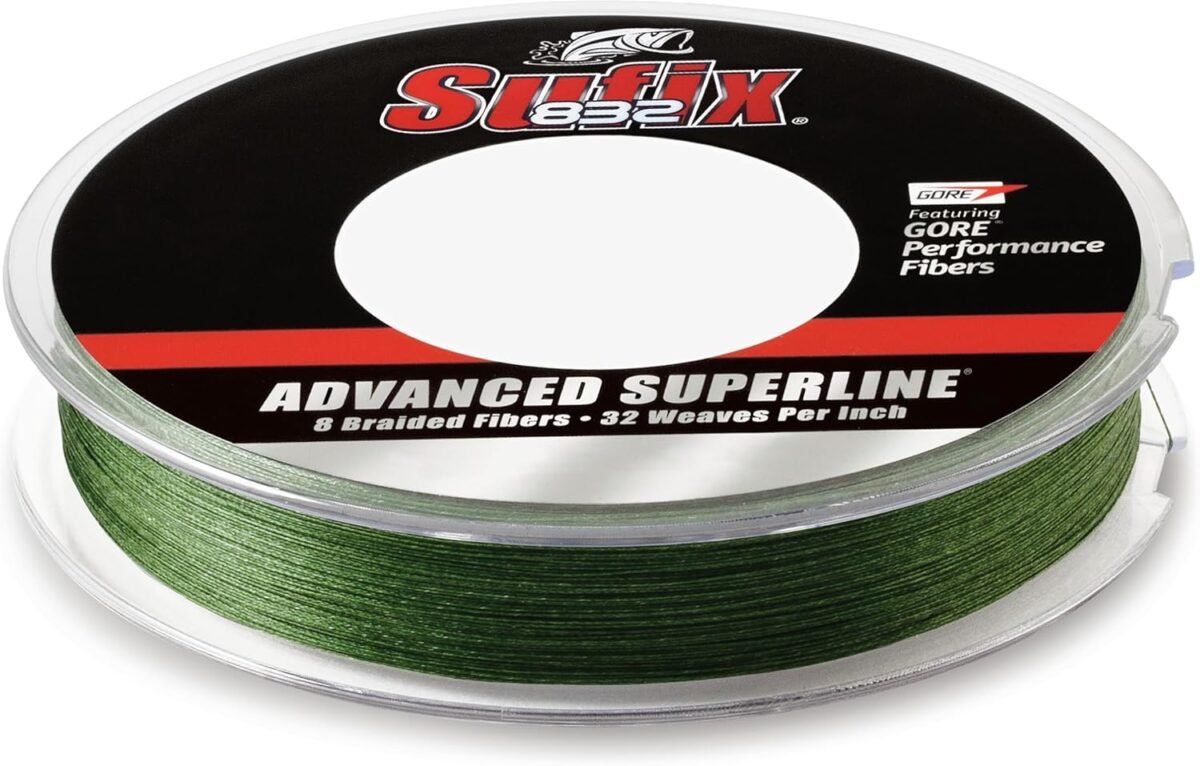
If you ask surf anglers around the world on forums, in tackle shops, on the water etc., Sufix 832 is the name that comes up most consistently. It’s not the cheapest option, but it earns its reputation.
Sufix 832 is an 8-strand construction built from 7 strands of Dyneema fiber plus a single Gore Performance Fiber which is the same company that makes Gore-Tex. That eighth fiber is what separates 832 from most other braids. It adds abrasion resistance, reduces line vibration (which means quieter casts and retrieves), and contributes to the line’s round, smooth profile. The result is a braid that casts exceptionally far, sits on the spool without digging in, and has virtually no memory coming off the reel.
Long-term durability is where 832 consistently outperforms in user reviews. It doesn’t thin out or go fuzzy over months of saltwater use the way some 8-strand braids do. Color fades over time (that’s a known complaint and a minor one) but the line itself holds up. And knot strength is excellent when you wet your knots before cinching.
One practical note: Sufix 832 requires a sharp blade to cut cleanly. Fingernail clippers will struggle, and your teeth have no chance. Carry fishing scissors or a good knife or great pliers. Here are the best pliers for surf fishing.
Best for: Swimbait fishing, jerkbait fishing, any spinning reel setup where casting distance and sensitivity are the priority.
Recommended pound test: 20lb for jerkbaits and light swimbait work, 30lb for heavier swimbaits targeting WSB and calico.
Available in: 6lb–250lb. Lo-Vis Green is the most popular color for surf fishing as it blends into the water column.
2. Power Pro Original Spectra — Best for Shark and Ray Fishing, Reliable Budget Option
| ; |
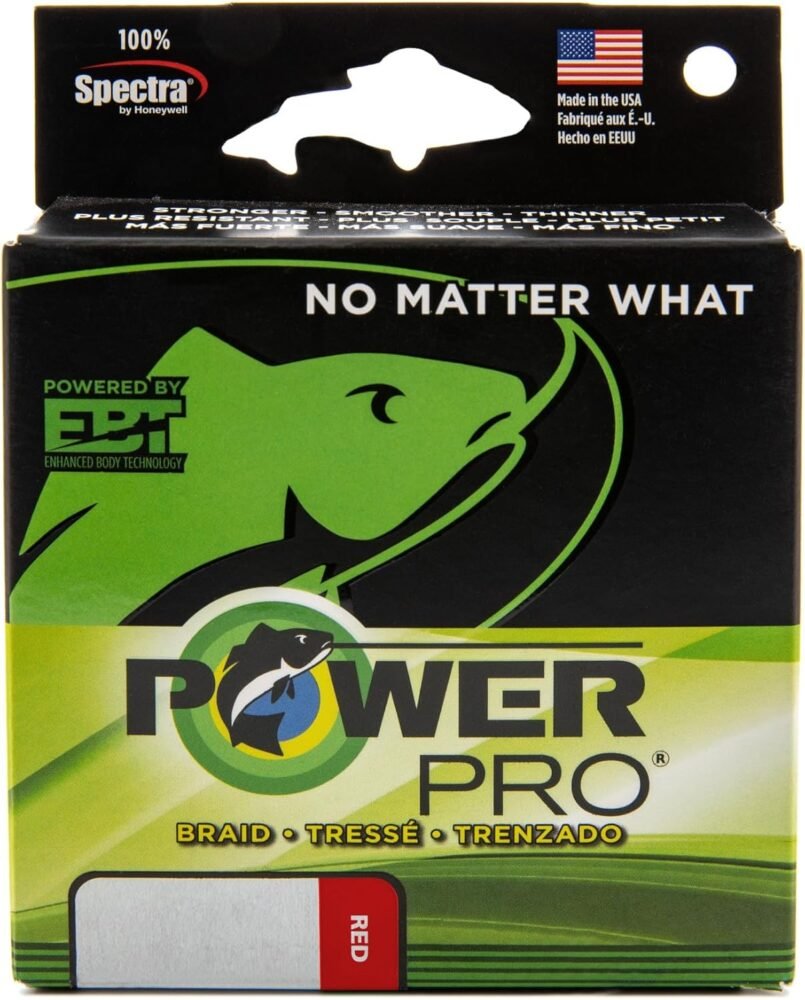
Power Pro has been the go-to braid for serious saltwater anglers for decades and for good reason. It’s not glamorous, it’s not cutting-edge, but it is consistent, widely available, and it flat-out works.
Original Power Pro is a 4-strand construction. That means a rougher profile than the 8-strand options on this list. But the 4-strand construction gives it better abrasion resistance, and for shark and ray fishing where your line spends time grinding against sand, shells, reef (unfortunately at times) and the occasional rough-skinned shark on the beach, that durability matters.
For 50lb braid on a shark rod sitting in a sand spike, Power Pro Original is a workhorse. Casting distance is solid enough and abrasion resistance matters more.
One honest note from the fishing community: there have been reports over the years of random line failures with Power Pro, particularly in older batches. Quality control has improved, but if you’re in the middle of a season, periodically check the first few feet of line above your topshot for wear.
Best for: 50lb shark and ray setups, baitcaster applications, anglers who want a reliable line at a price point that won’t hurt when it’s time to replace.
Recommended pound test: 50lb for shark and ray setups with a 80-100lb mono topshot.
Available at: Most local tackle shops, Bass Pro, Amazon.
3. Daiwa J-Braid X8 and X8 Grand — Best Casting Distance
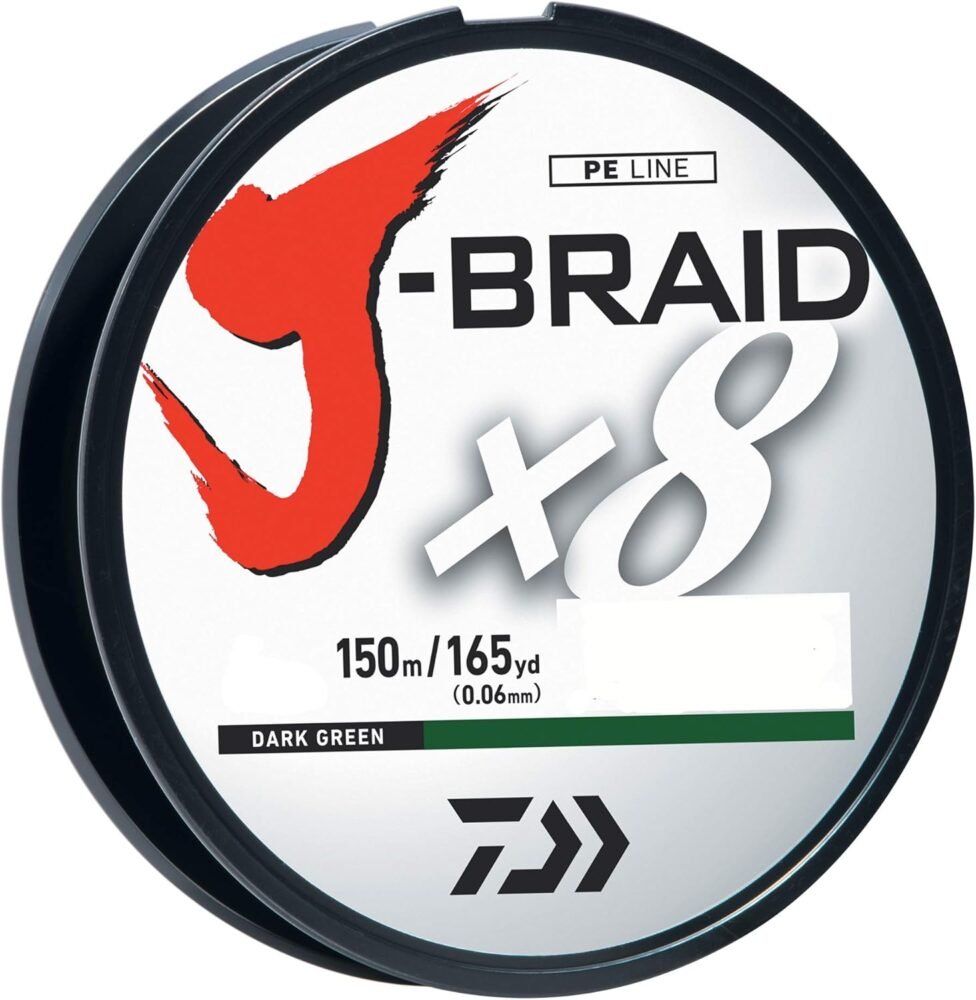
Daiwa’s J-Braid line is one of the most talked-about braids in the surf and inshore fishing community, and for good reason. The X8 and X8 Grand are both worth knowing about, and they serve slightly different purposes.
J-Braid X8 is an 8-strand construction with near-zero memory, ultra-limp body, and an extremely thin diameter for its rated pound test. That thin diameter translates to exceptional casting distance on spinning reels. In side-by-side tests, J-Braid X8 regularly produces casting distances comparable to more expensive competition. The suppleness that makes it cast so well is also what makes it an excellent match for spinning reels. It lays flat on the spool and comes off cleanly. On the downside, that same limpness can be a liability in very heavy tests in general, but especially with baitcasters. Backlashes with thin, limp braid can be nearly impossible to clear.
| ; |
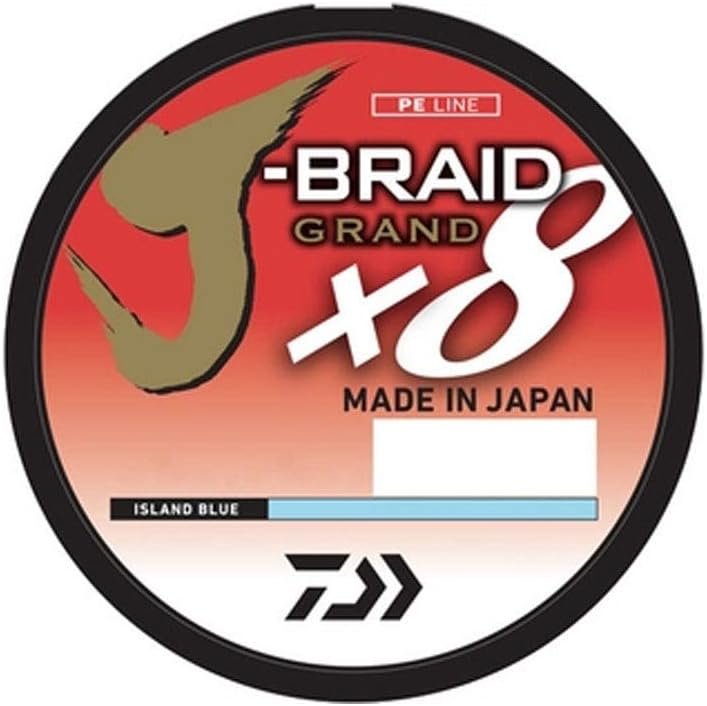
J-Braid X8 Grand is the premium version. It uses IZANAS-based PE fiber construction, which Daiwa states delivers significantly better abrasion resistance than standard PE. The Grand is rounder, smoother, and holds up better to the kind of grinding abuse that comes from dragging through kelp, over sand, and in and out of rocky areas. Casting distance is comparable to the standard X8. If you’re fishing structure or kelp-heavy stretches of the SoCal coast, the Grand is worth the additional cost.
| ; |
Both versions are a great option if you haven’t tried them. The consensus from anglers who’ve fished both is that they cast beautifully and handle well on spinning reels.
Best for: Swimbait and jerkbait fishing where maximum casting distance is the priority. Walk-and-wade style fishing where you’re covering ground.
Recommended pound test: 20–30lb for light tackle lure fishing. Go with the X8 Grand if you’re fishing any kelp or structure.
4. SpiderWire EZ Braid — Best Budget Option, Surprisingly Tangle-Resistant
| ; |
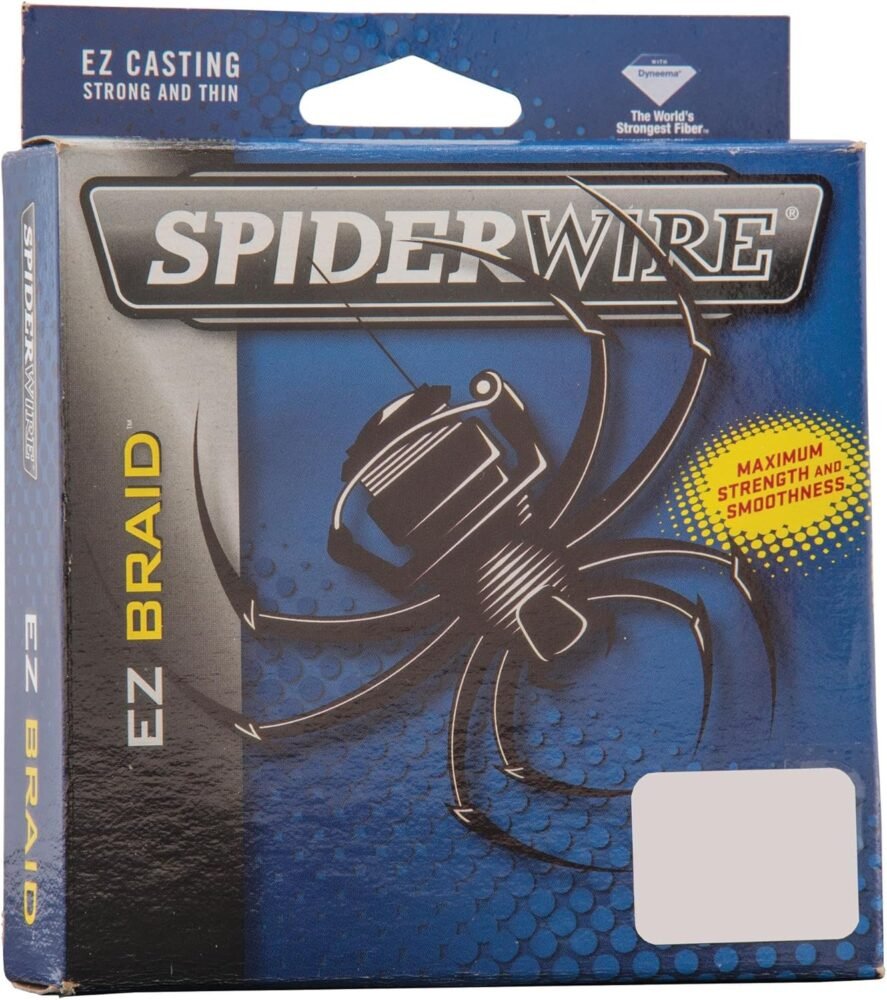
SpiderWire EZ Braid gets a bad reputation in some circles, and some of that reputation is deserved. It has a flat profile rather than the round profile of premium 8-strand braids, knot strength can be an issue if you don’t wet your knots properly, and it’s not going to win any casting distance competitions against Sufix 832 or J-Braid.
But here’s the honest truth: for lure fishing on a spinning reel, EZ Braid may be the most tangle-resistant option on this list. The flat construction lays on the spool predictably, doesn’t whip and loop the way round 8-strand braids can, and in personal experience running it on spinning setups targeting halibut, seabass, calicos and surfperch, it simply doesn’t cause problems. It’s not glamorous, it’s not the choice of tournament anglers, but it quietly does its job session after session.
The key insight from long-time users is that EZ Braid requires proper spooling. Line twist from improper installation is the cause of most of the horror stories you’ll read about it snapping and bird-nesting. Spool it correctly with tension and the issues largely disappear.
At around $14 for a 300-yard spool at Walmart, Amazon or Bass Pro, it’s also the most budget-friendly option on this list by a significant margin. For an angler who burns through a lot of line, or wants to spool multiple rods without spending a fortune, EZ Braid is hard to argue against.
SpiderWire Stealth is worth a mention here as a step up within the SpiderWire lineup. Stealth uses a tighter, rounder construction than EZ Braid, casts farther, and handles well on both spinning reels and baitcasters. It’s an option worth considering for shark setups as well as lures. No significant complaints from use in either shark fishing or lure fishing scenarios. It’s a solid, underrated braid.
Best for: Lure fishing on spinning reels or shark fishing, budget-conscious anglers, situations where you’re going through line frequently and cost matters.
Recommended pound test: 20–30lb for lure work and 50lb for sharks.
What About No-Name Braids?
One note worth including: the market is flooded with no-name and private-label braids, many of which will reach out to fishing content creators offering free spools in exchange for reviews. Some of these lines (personal experience) are genuinely bad, have inconsistent diameter, weak knot strength, and and tangle all the time. Stick with brands that have earned their reputations through years of real-world use.
One exception here. I am a big proponent of searching through local forums and getting feedback from real-world anglers who have used different types of braid and you’ll often find some have used no name braids and really enjoyed them. But also, each angler has their own personal experiences and often, one bad experience shapes a perspective.
Wind Knots: The Surf Angler’s Least Favorite Thing
Wind knots are not actually caused by wind. They’re caused by loose line loops forming at the moment of a cast and getting caught up under the spool. Wind makes them worse by creating slack in the line during the cast, but the root cause is almost always one of four things:
Overfilled spool. The number one cause. Leave a gap of about an eighth of an inch from the rim of your spool. An overfilled spinning reel sheds loose coils the instant you open the bail.
Casting into an onshore wind. Wind blowing toward you creates slack in the line during the cast before it hits the water. That slack is where wind knots are born. In onshore conditions, use slightly heavier lures or sinkers and cast on a lower trajectory.
Limp, thin braid in the wrong application. Ultra-limp 8-strand braid on a spinning reel is generally excellent, but in gusty conditions or with very light lures, that limpness works against you. A slightly stiffer 4-strand may perform better in those specific conditions.
Not closing the bail manually. If you let the reel close the bail automatically on the first turn of the handle, you create a tiny line twist every single cast. Over a session, those small twists compound into wind knot territory. Make a habit of closing the bail by hand after every cast.
Casting Too Hard. This one usually ends up being a combination of casting too hard and at least one of the other things mentioned above. But yah, if you try to cast too hard, a loose loop is more likely to come off the spool causing a “wind knot”.
A Quick Note on Color
High-visibility yellow or chartreuse can be useful for watching your line. Lo-vis green and grey are better for clear shallow-water lure fishing where you want the braid to be as invisible as possible. In general, the fluorocarbon leader between your braid and your hook is doing most of the heavy lifting in terms of line visibility, so the braid color matters less than many anglers think.
Final Recommendations at a Glance
| Line | Type | Best For | Pound Test |
|---|---|---|---|
| Sufix 832 | 8-strand | Best overall — swimbait, jerkbait | 20–30lb, 50lb shark |
| Power Pro Original | 4-strand | Shark and ray setups, budget spinning | 50lb shark, 20–30lb lure |
| Daiwa J-Braid X8 / Grand | 8-strand | Maximum casting distance, lure fishing | 20–30lb, 50lb shark |
| SpiderWire EZ Braid | Flat construction | Budget lure fishing, tangle-resistant option | 20–30lb, 50lb shark |
| SpiderWire Stealth | 4-strand | Heavier applications, good all-around | 20–30lb, 50lb shark |
For light tackle targeting corbina, surfperch, and croaker: skip the braid and run 15lb mono. It’s forgiving in the fight, easy to handle for beginners, and costs almost nothing to replace. Sometimes the best gear choice is the simple one. Again though, if you love the sensitivity of braid or just love using braid, that’s all good too!
Have a line you swear by that didn’t make this list? Drop it in the comments below. I’m always looking to hear what’s working for other surf anglers on the SoCal coast.
All Amazon links on this page are affiliate links. Purchasing through them supports this site at no additional cost to you.