How El Niño Ruined Surf Fishing in 2026
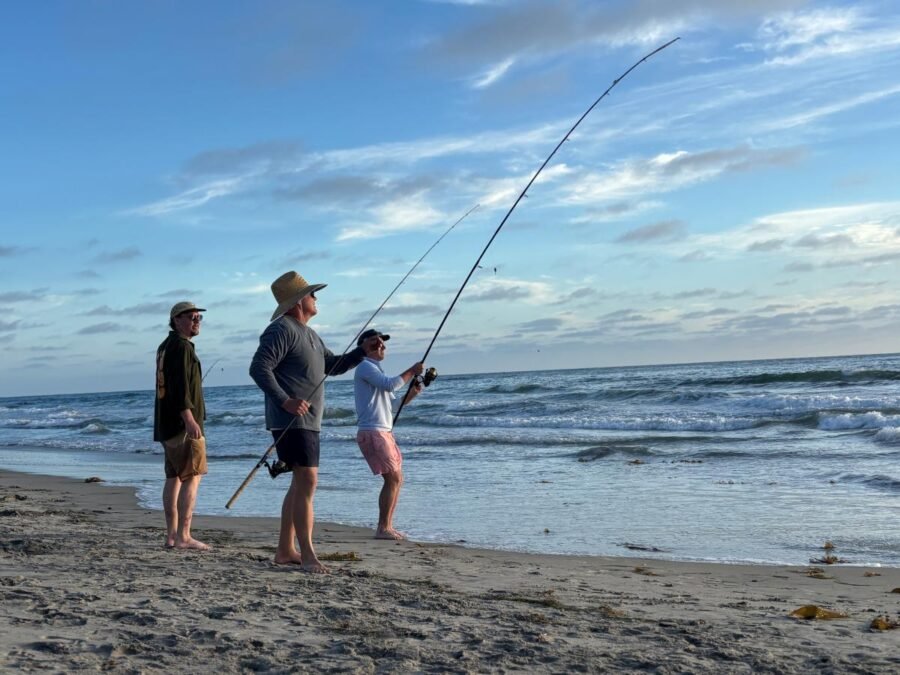
There are bad surf fishing seasons and then there is El Niño surf fishing in 2026. In 13 years of fishing the San Diego coast I have never experienced anything close to what this year has put us through. It’d have been bad enough to experience a simple stretch of rough surf. Instead, we’ve experienced a relentless, months-long grind of elevated swell, very few windows of good conditions, and a light tackle bite that never showed up the way it should have. It’s been the WORST year of surf fishing I’ve ever seen. All that said, the leopard shark bite seemed unaffected. Everything else, however… toast.
This article is my attempt to explain what actually happened and why – because I don’t think it was random bad luck. I think there’s a clear story here, and understanding it makes the frustration a little more tolerable. To sum it up as concisely as possible…
Summing It All Up
Abnormally Warm February
Consistently Elevated Surf
Lack Of Upwelling (nutrients)
Sand Crabs Struggle To Get Established
Lack of Bait Available
Abnormally Warm Water Temps
Surf Species Push North To Cooler Water
It Started in February
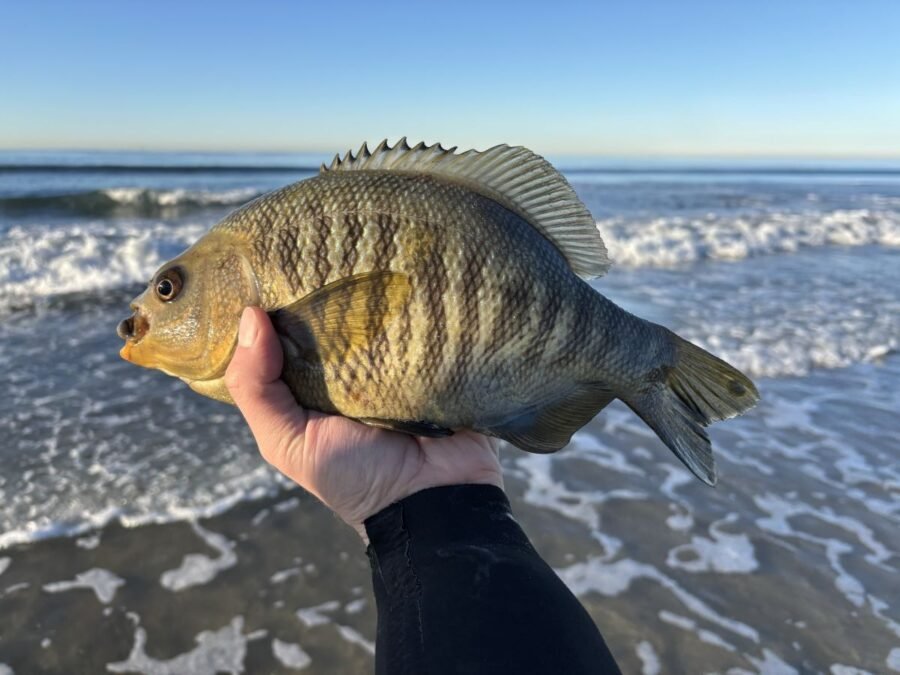
Most years, February is quietly setting things up for the season ahead. Water temps in San Diego typically bottom out at around 57-58°F – cold by SoCal standards – and the spring warming trend begins in March and April as conditions start to build toward peak summer fishing.
February 2026 was different. Water temps averaged 61°F for the month, ranging as high as 63°F at points. That’s 2-3 degrees above the historical February average. Additionally, the air temp in So Cal was oddly warm through February. I recall atleast one week of 90+ degree weather in inland San Diego county. On the surface that sounds like good news – warmer water usually means more active fish. But what it might have actually done was signal the beginning of a season that was going to play by its own rules.
That early warmth was the first sign that an El Niño pattern was already influencing conditions. The biological timing that governs when fish feed, when sand crabs emerge, and when the surf zone ecosystem activates is calibrated to a specific seasonal temperature progression. When February runs warm, that calibration gets thrown off before the season even starts. The fish respond to environmental cues – bait availability, water temperature gradients, food concentrations – and when those cues arrive out of sequence, the whole system gets pushed out of phase.
The El Niño Effect – What It Actually Does to Surf Fishing
El Niño is a climate pattern driven by unusually warm sea surface temperatures in the equatorial Pacific. It alters global weather systems in ways that most people associate with winter rain events in California. But El Niño’s summer effects are just as significant for anyone fishing – and in 2026, we felt all of them.
Suppressed upwelling destroyed the food chain from the bottom up. In a normal year, coastal upwelling brings cold, nutrient-rich water up from depth along the California coast. That nutrient pulse is the engine of the nearshore ecosystem – it feeds the plankton, the plankton feed the sand crabs and baitfish, and that entire food chain draws corbina, spotfin croaker, yellowfin croaker, and other species into the surf zone to feed. El Niño suppresses upwelling. Warmer surface water sits over the cold nutrient-rich water and prevents it from reaching the surface. When upwelling weakens, the food chain loses its foundation – and the surf zone gets noticeably quieter as a result.
Elevated water temps pushed fish out of their comfort zone. By mid-summer, San Diego beach water temps were running 74-75°F – well above the 67-68°F historical average for July and August. Some years that kind of warmth concentrates fish in the surf. This year it appears to have pushed many of the species we target north toward cooler water, or simply redistributed them somewhere inaccessible from shore. A local offshore angler I spoke with told me that the marlin fishing has been some of the best in years and the coastal yellowtail bite has been exceptional too – the warm water that hurt inshore fishing seemed to have helped offshore fishing in some ways.
El Niño fueled a more active Eastern Pacific hurricane season, which drove the swell. This is the piece of the puzzle most surf anglers didn’t connect. By June 2026, NOAA had confirmed developing El Niño conditions with forecasters projecting an 82% chance of continuation through winter – and potentially a very strong or super El Niño event. El Niño reduces wind shear in the Eastern Pacific, creating favorable conditions for tropical storms and hurricanes to form and intensify. That meant a more active Pacific hurricane season sending a continuous stream of south and southwest swell train after swell train into Southern California. Starting in late May and continuing through the entirety of the summer, we got the most consistently elevated surf I have experienced in 13 years on this coast. Weeks and weeks of rough water that churned up the surf zone, prevented sand crab beds from establishing, and made productive surf fishing sessions the exception rather than the expectation.
The Sand Crab Collapse
This is where everything converged into a perfect storm against light tackle surf fishing.
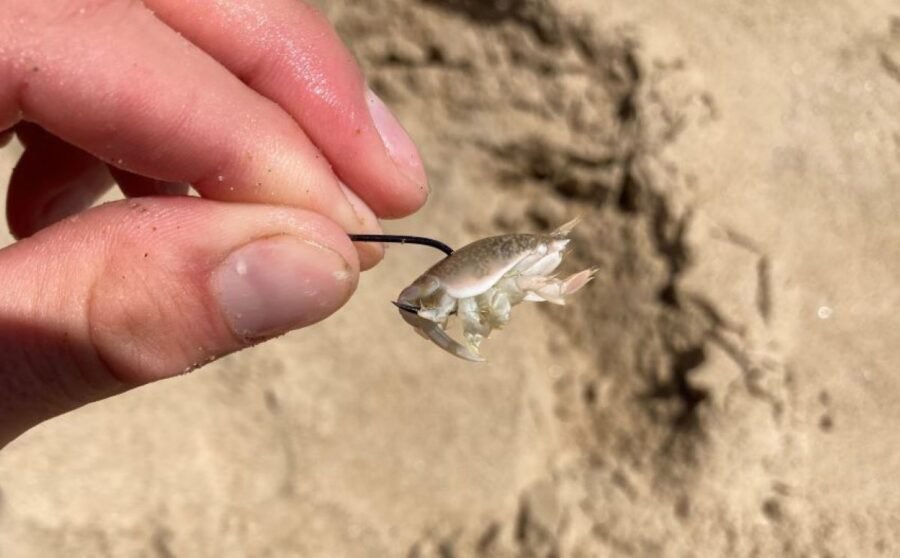
Sand crabs are the primary bait for corbina, spotfin croaker, and yellowfin croaker. They’re also the foundation of the inshore food web – the reason those species congregate in the surf zone in the first place. In a normal summer, sand crabs are everywhere in good sizes by June and remain abundant through September. You find them in beds, the beds are plentiful, and bait is never a limiting factor.
2026 was completely different. The persistent swell pattern that ran from late May through summer kept moving sand on and off the beaches rather than allowing the stable deposition that creates and maintains sand crab beds. Every time conditions settled enough for beds to form, another swell cycle hit and disrupted them. The result was months of inconsistent crab availability – mostly micro-sized crabs in scattered, unpredictable locations, with reliable beds of good-sized crabs almost nonexistent at many San Diego beaches. Tie in the lack of upwelling causing less plankton and nutrient-rich water in the surf zone and there’s very little reason for sand crabs to be here at all.
Without dependable bait, the light tackle bite was compromised even on sessions when fish were present. And I know from my own sessions on the water that there were fish present – corbina and spotfin visible in the shallows on multiple occasions. But seeing fish in the shallows and catching them are two very different things. Additionally, the quantity of fish I’ve seen actively working the shallows in 2026 is a fraction of what I see in a normal year. The disruption ran deeper than bait availability.
What the Numbers Say
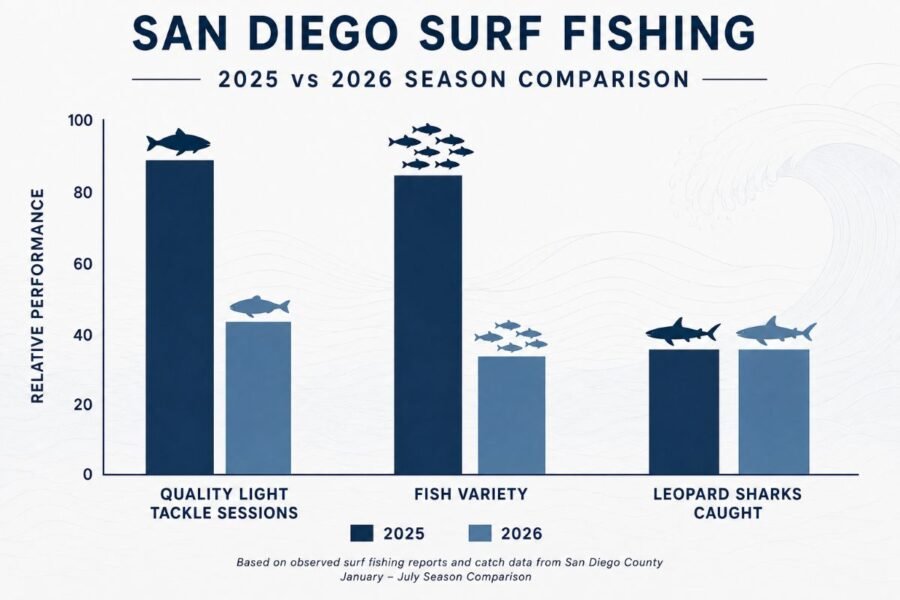
I keep detailed logs of every guided session I run. Looking at the data from 2025 versus 2026 tells a story that goes beyond general impressions.
In 2025, peak season July sessions produced some solid fishing – a session where we caught approximately 42 fish, multiple sessions with 24-inch corbina and 21-22 inch spotfin, consistent multi-species days with leopard sharks mixed in throughout. The notes read like a season I’d be proud of.
In 2026, the July log tells a different story. Sessions where we could see corbina in the shallows but couldn’t get them to bite. Sessions where surfperch were the only species putting in consistent appearances when we should have been into corbina and spotfin. The quality fish showed up occasionally – some genuinely nice spotfin and corbina made appearances – but the overall frequency has been dramatically lower and the sessions with a true mixed bag bite were rare compared to 2025 and years prior.
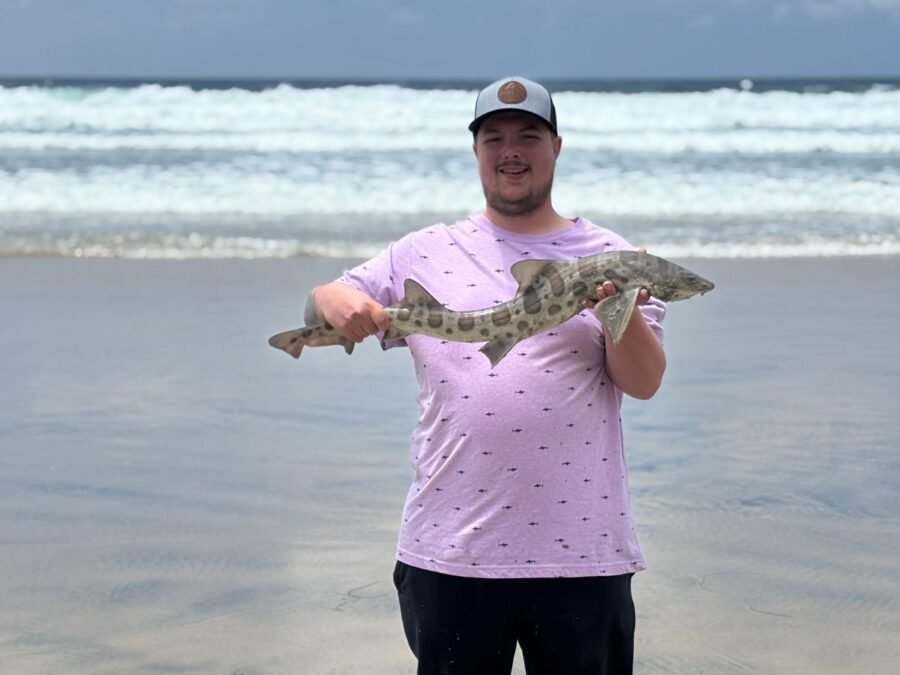
The one category that held up – and genuinely held up exceptionally well – was leopard sharks. We’ve landed 44 leopard sharks on guided sessions through August 2026, with sharks showing up in 19 of 32 logged sessions in which we were targeting sharks (most of the misses coming in recent sessions). When the light tackle bite was flat, the shark rod often saved the day. On more than one session this year the notes read “terrible light tackle bite, but sharks made it worthwhile.” Leopard sharks have been the consistent producer in a season that didn’t have many of them.
The Offshore Flip Side
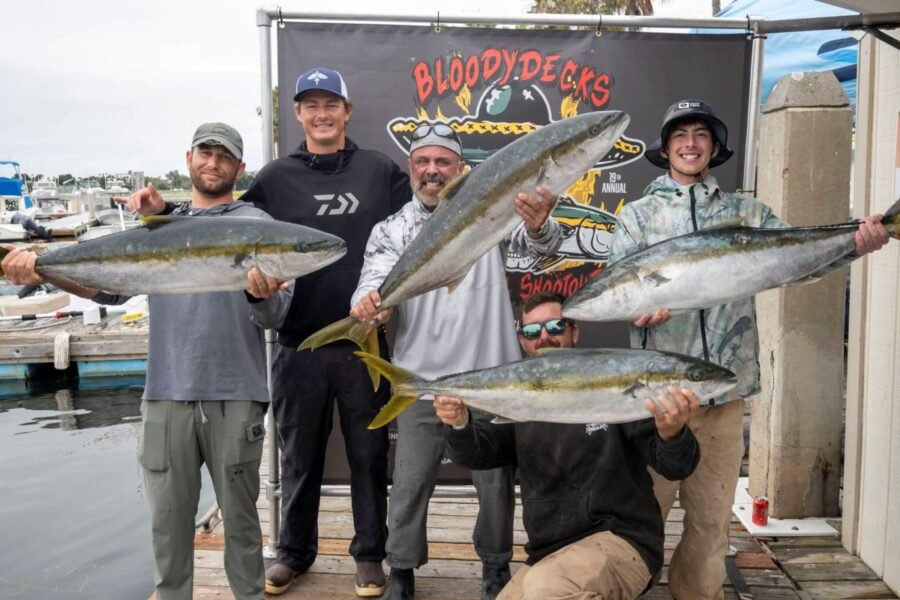
It’s worth noting that while the surf fishing suffered, the offshore and coastal fishing picture was very different. A local offshore angler I spoke with described the marlin bite as some of the best in recent years and said coastal yellowtail fishing has been exceptional – driven by the same warm water conditions that disrupted the inshore fishery. Kelp paddies have been fishing well for yellowtail and dorado. The tuna bite has been average to below average with bluefin pushing northwest and mainly smaller yellowfin around, but overall the offshore picture has been strong. His expectation is that the fall offshore bite in September through November should be solid.
El Niño years tend to work this way – the warm water that disrupts the nearshore inshore food chain and pushes species north creates very favorable offshore conditions at the same time. The same climate driver has completely opposite effects depending on where you’re fishing.
Is There Any Hope for Fall?
Honestly? A small window, but don’t expect a dramatic recovery.
Fall surf fishing in San Diego is generally inconsistent in normal years. The corbina and spotfin bite typically tails off from its summer peak, though there can be productive windows in September and into October when water temps begin to pull back. Lure fishing tends to hold up a bit better in fall – halibut remain catchable and calico bass can be in play. Shark fishing usually produces a few bounces as water temps begin to cool, but by October and certainly by November, the shark bite is typically winding down to near-offseason levels and light tackle follows close behind.
In a delayed season like 2026, there’s an argument that the fall window could be slightly more productive than usual – the species we’ve been waiting on all summer are still present and potentially more active as conditions improve. But I’m managing expectations rather than predicting a late-season boom. The disruptions that shaped this season were deep enough that a few weeks of calmer conditions aren’t going to undo them overnight – we need consistency and cooler water and weather.
The best outcome for fall 2026 is a modest improvement in light tackle fishing as water temps ease back, continued halibut and calico opportunities on lures, and some reasonable early-fall shark sessions before the bite slows for winter.
The Takeaway
2026 has been a year defined by forces mostly outside our control. A warm February that started the season off-beat. An El Niño pattern that suppressed the nearshore food chain, elevated water temperatures, and drove a more active Pacific hurricane season that has kept consistent south swell rolling through all summer. Sand crab populations that never stabilized because beach conditions never stabilized. A light tackle bite that never fully arrived.
The silver lining – if there is one – is understanding why. 2026 wasn’t a sign that SoCal surf fishing is declining or that the fish populations are in trouble. It was an El Niño year, and El Niño years do this. The conditions that created 2026 are temporary. The fish will still be there when things normalize.
We just have to fish through it and wait for a better year.
Subscribe to my YouTube channel here @surffishinginsocal.
Hey Nick
curious why , in the absence of decent sand crabs, the bite on artificials didn’t seem to really pick up all that much? Did see some fish that I normally would not see on Gulp and similar offerings, but just enough to give false hope that maybe things were about to change.
Greg
The warm water and lack of upwelling would result in less bait fish as they rely on plankton in the surf zone so there will be less calico, halibut and seabass etc. also they just prefer cooler water than what we have right now.
I caught two 4 inch perch Friday and considered it a huge victory for this summer. More golfing than fishing for me this year. Fingers crossed for the next.
Sounds about right. Enjoy what’s good.
Excellent analysis Nick.
yep agree with everything you said been saying the same , I will add that the warmer water also has an effect on kelp & eel grass speeding up the die off process fishing has been difficult enough , then add the salad and it makes it even worse
Yup. Certainly true as well.
Thanks for the write up Nick! Enjoyed your take on everything.
For sure! Hoping next year gets back to the norm.
From what I’ve been told the last El Niño was pretty good for both surf and offshore fishing. What’s the primary difference this time around?
I didn’t assess the last one in much depth as the bite wasn’t much different than normal. So I can’t quite say.
Great article but you’re giving El Niño too much credit, too early. El Niño is just getting started.
NOAA says that warm water and upwelling has been brewing since May of last year.
Wouldn’t say too early. It could last for another year… that said it still caused all this.
Very good article, was wondering this years trips to San Onofre beach were so bad. The swell in August has been a killer. The sand crab explanation makes perfect sense. Thank you very much for this very informative article. As they say in baseball: “There’s always next year!”
Yessir! Hoping for a good rebound season.
Hey, I know it’s been a bit since this article was posted, but that being said, I was curious if you’ve been out leopard shark fishing lately. I was wondering if it’s even worth my time to go out this weekend. I was hoping I would have a good shot with the way the water temperature is, but I’m also concerned due to the hurricane that just swept through the coast. I’d love to hear your opinion, and thank you so much for all the info you give out; I wouldn’t be surf fishing without these articles.
I have not been out lately and I know surf is elevated so I’d lean toward it not being worthwhile but that said, they can always be caught – it’s just not the best right now in terms of conditions or season