Bat Ray Fishing From the Beach: How To
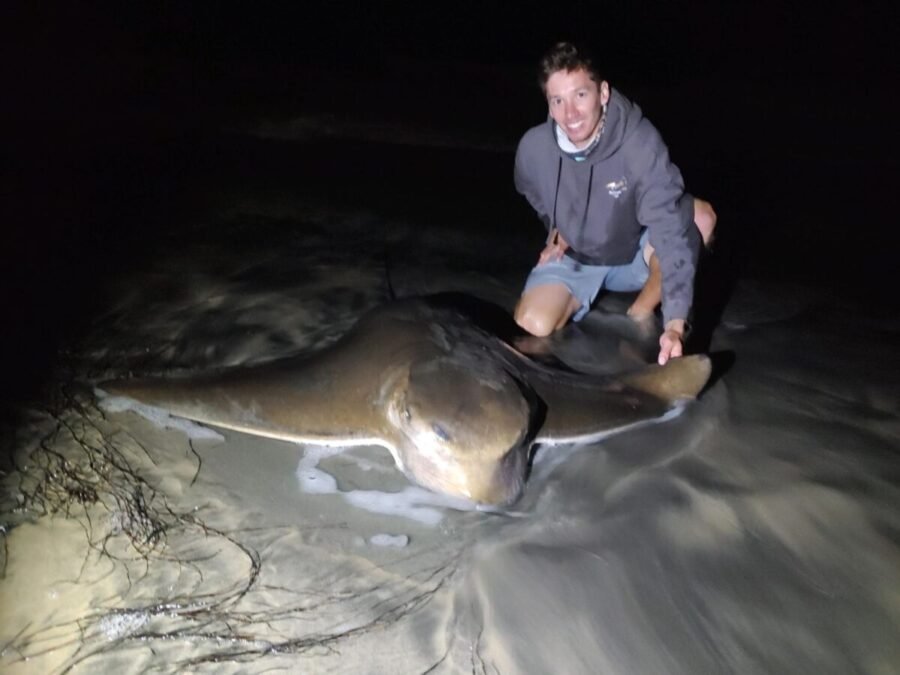
If you’ve done any amount of surf fishing in Southern California, chances are you’ve hooked into a ray. And if you’ve hooked into enough of them, you’ve probably noticed that not all rays are the same. The three species of rays you’ll most commonly encounter from the beach here in So Cal are the stingray (specifically the round stingray), the guitarfish (or shovelnose shark), and the bat ray. Many anglers can’t tell them apart, and honestly, that lack of knowledge can get you into trouble. More on that in a second.
In this article, we’re going to talk specifically about bat ray fishing, what they are, when and where you’ll find them, how to tell them apart from the other rays, how to handle them safely, and what gear you’ll need if you want to actually target them on purpose (yes, some people do, and with good reason).
What is a Bat Ray?
The bat ray (Myliobatis californica) is a large, powerful elasmobranch, meaning it’s in the same family as sharks and rays. What sets the bat ray apart visually is its distinctly wing-like pectoral fins that flare outward from a defined head, almost like a mini manta ray. Their coloration is typically dark brown to black on the dorsal (top) side and white on the underside. They’re a unique looking fish, and honestly, they’re impressive creatures.
Bat rays are built for the bottom. They scour the sandy flats and muddy bay areas using their broad heads to uncover clams, worms, sand crabs, and crustaceans from beneath the sand. When you’re surf fishing with sand crabs, squid, or cut bait, it isn’t uncommon for a bat ray to find your bait.
| Legal Limit (#) | Refer to CDFW (I believe 10 bag limit) |
| Legal Size (in) | Refer to CDFW (I believe N/A) |
| Record Size | Can exceed 200 lbs (wingspan to 6 ft) |
| Fighting Strength (-/10) | 9/10 |
| Range | Oregon to the Gulf of California |
| Habitat | Sandy/Muddy bottoms, bays, surf zone |
All information is unofficial. Always refer to the California Department of Fish and Wildlife for current regulations.
Bat Ray vs. Stingray vs. Guitarfish: How to Tell Them Apart
This is the most important thing you need to know, and I mean that. Confusing these three species when you’re trying to handle one on the beach can result in a trip to the hospital, or at minimum a lot of unnecessary panic. All three are common in the So Cal surf, all three get lumped together as “rays” by most beginners, and all three require a different approach when it comes to handling. Here’s how to tell them apart quickly.
Bat Ray
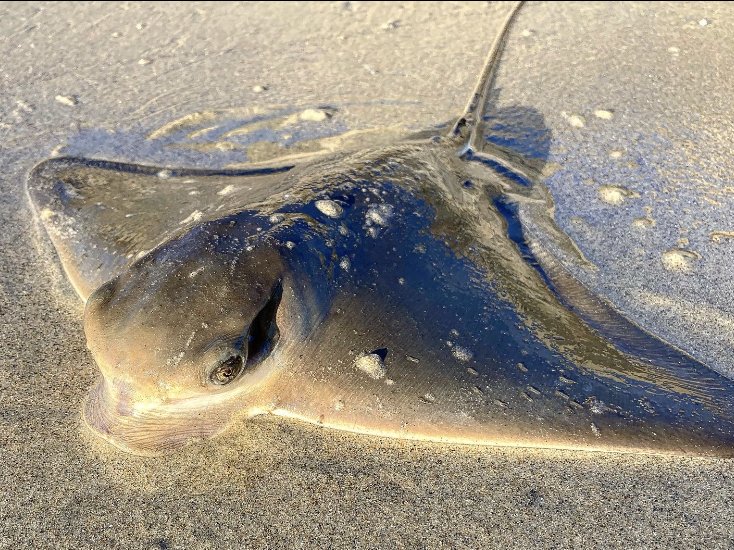
- Has a distinctly defined head that protrudes forward from the pectoral fins. The head looks separate from the “wings,” almost like a smaller version of a manta ray
- Much larger overall. Adult bat rays regularly hit 50+ lbs and can push well over 100
- Dark brown to black on top, white on the underside
- The tail is long and whip-like with a venomous spine, though it sits further down the tail than on a stingray
- From above, the body looks diamond-shaped with the head jutting out at the front
Round Stingray (Urobatis halleri)
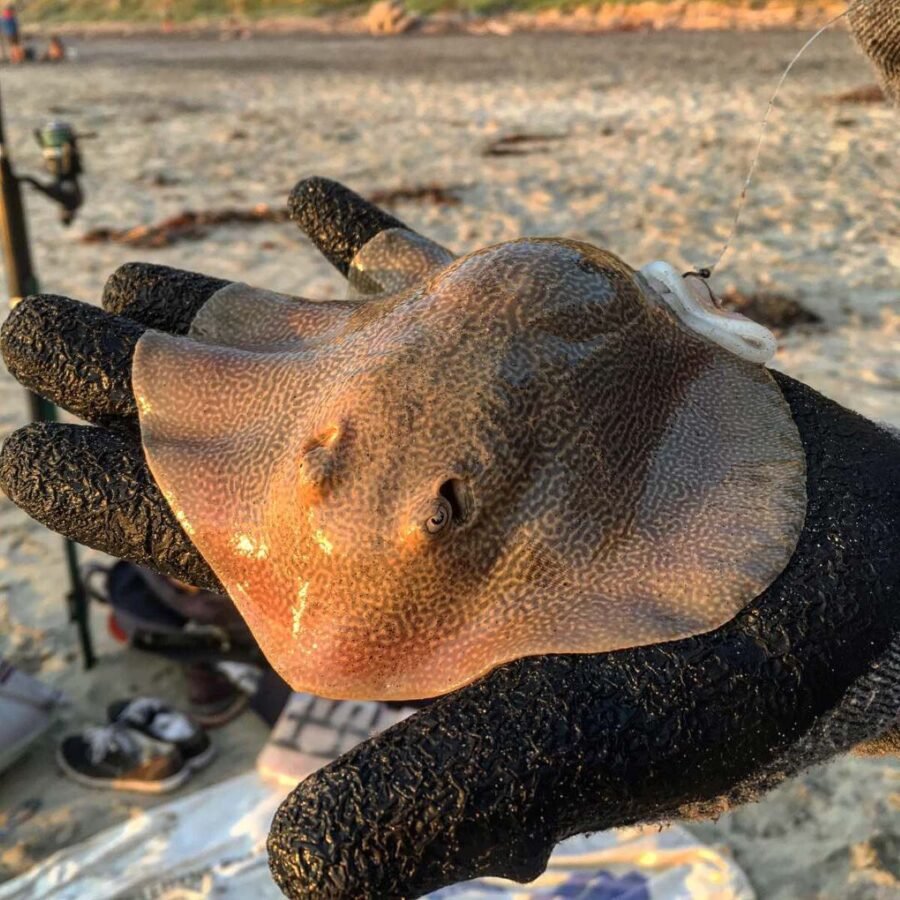
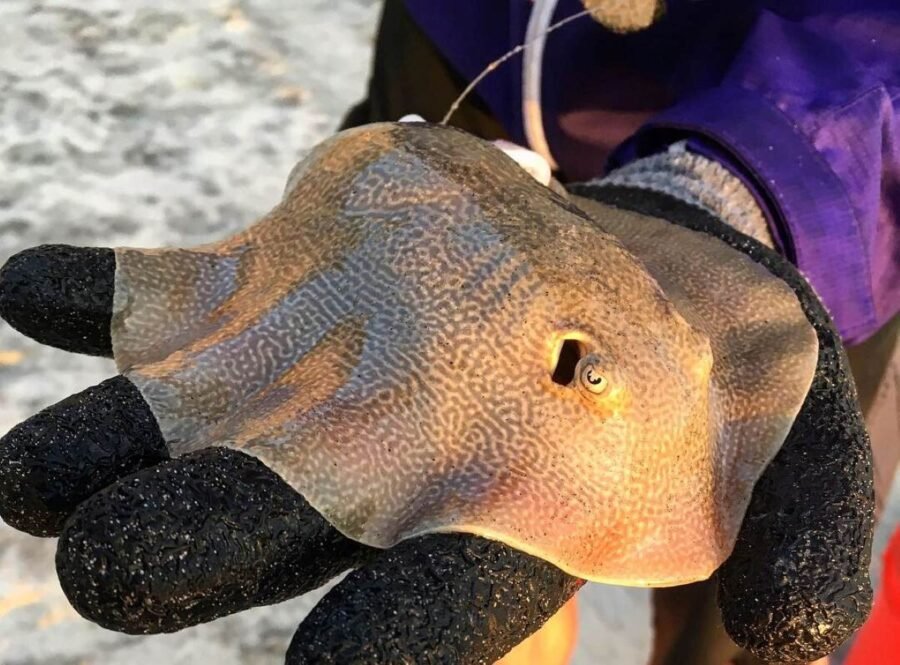
- Almost perfectly circular body with no defined head protruding from the disc
- Much smaller. Typically just a few inches across, up to about a foot in diameter
- Tan to brown in color, sometimes with faint spots
- The barbed venomous spine sits right at the base of the tail, very close to the body. This is why round stingrays are responsible for so many ankle and foot injuries on So Cal beaches. You step on one buried in the sand and the spine drives straight up into your foot or ankle
- If something small, flat, and disc-shaped comes up on your line, this is what it is
Shovelnose Guitarfish
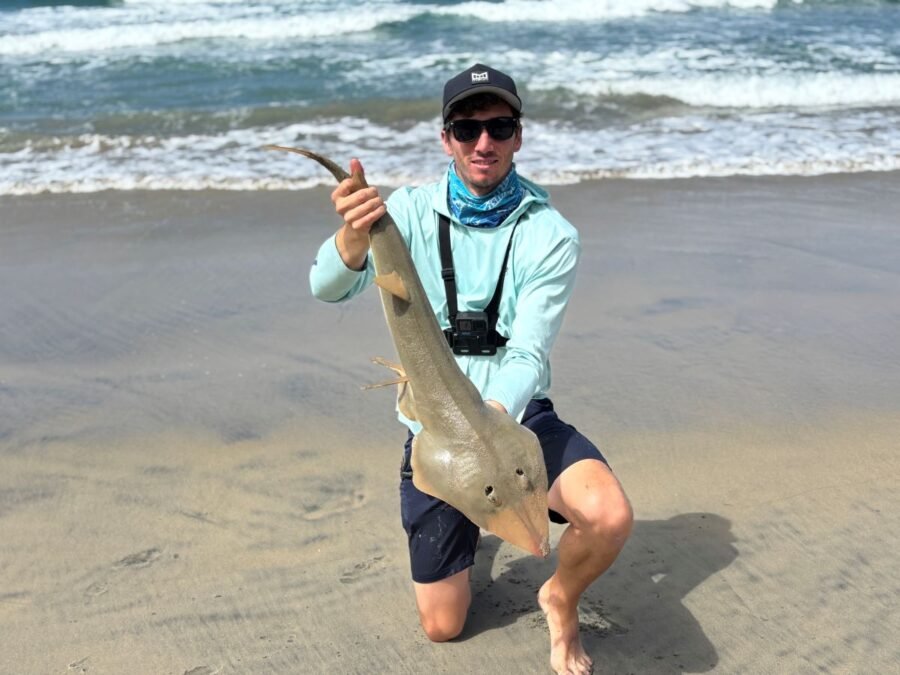
- Immediately recognizable once you know what to look for. The front half of the body is flat and ray-like, while the back half transitions into a defined, shark-like tail with dorsal fins
- The snout is elongated and shovel-shaped, coming to a point. Nothing else in the surf looks like this
- Coloration is typically sandy brown or tan on top, while the underside is whiter
- No venomous spine. This is the one of the three you can handle most confidently, and as covered in the shovelnose guitarfish article, they are genuinely fun to catch and surprisingly good eating
- They can get large. The record sits at 61.5 inches and 40 lbs, and a big one on light tackle is a serious fight
The short version: if it has wings and it is big and dark, it is likely a bat ray. If it is small and perfectly disc-shaped with no head, that is a round stingray, and the one to be most cautious with on the beach. If it looks like a shark-ray hybrid with a pointed shovel nose and a shark tail, that is a shovelnose guitarfish, and you can breathe easy because there is no spine to worry about.
If you’ve been surf fishing for any length of time and you’ve done the stingray shuffle, you already know the drill for avoiding the round stingray.
When and Where to Find Bat Rays in the Surf
Like most of the bigger species you’ll encounter in the So Cal surf, bat rays follow the warmth. Their peak season runs from roughly June through August, though they’re present year-round like sting rays. And time of day doesn’t matter much.
You’ll find them in the same sandy, shallow zones where you’d expect to find corbina, guitarfish, and leopard sharks. Bottom line, if you let your bait sit out there long enough on a sandy beach, you’re giving yourself a good bet at catching a bat ray.
What Do Bat Rays Feed On?
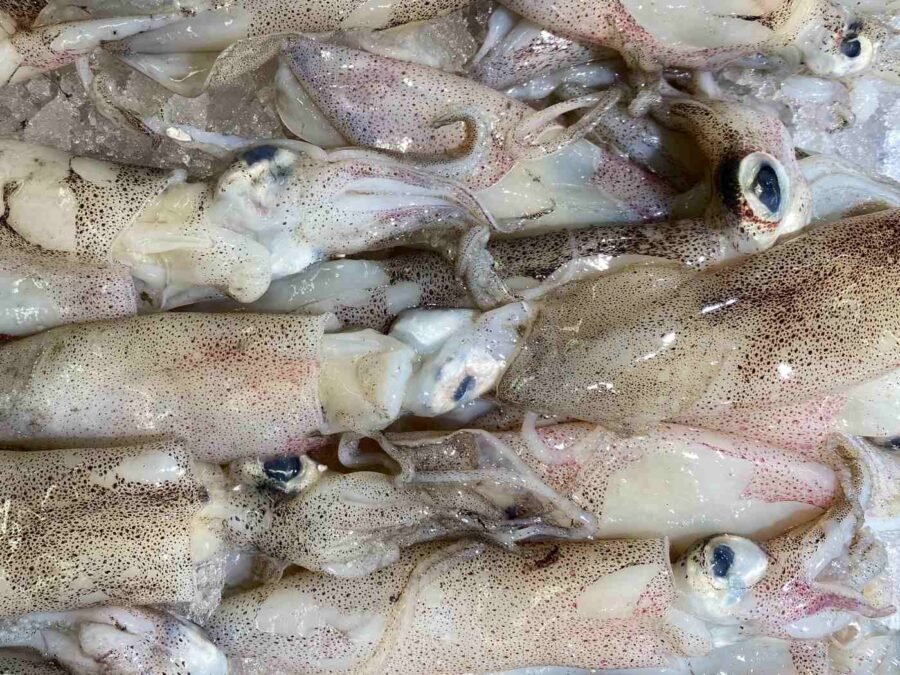
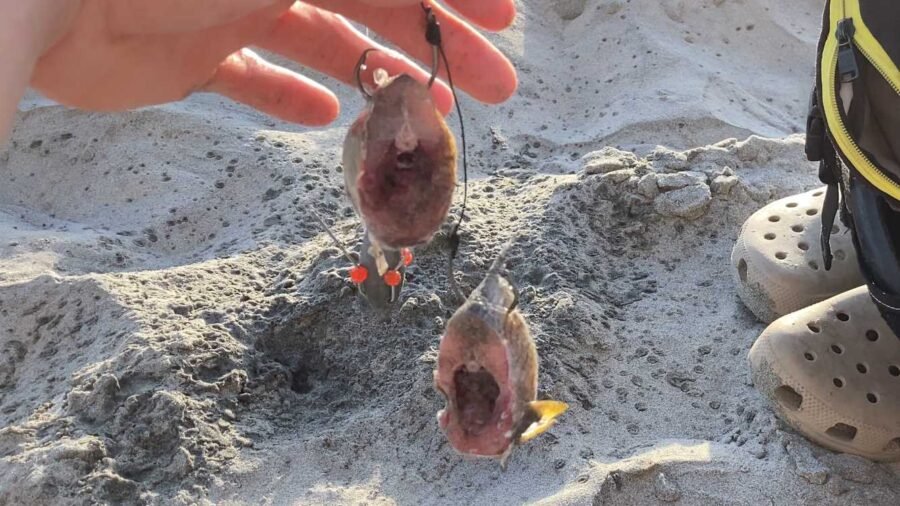
The same baits that work for everything else from the surf here in So Cal work for bat rays. However, the best bait for bat ray fishing is squid. Other baits that typically catch bat ray as bycatch include sand crabs, and cut bait. They’re opportunistic feeders and they’re not picky. What they are is strong, which leads me to the next section.
The Fight: What to Expect
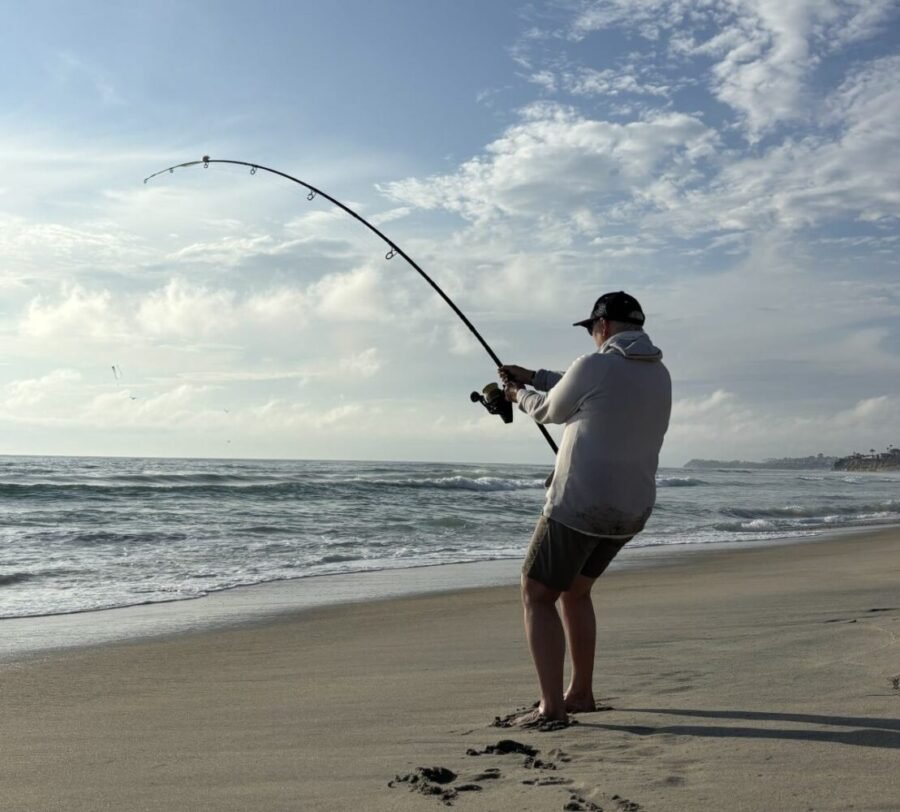
If you’ve never hooked a bat ray before, let me prepare you. They are one of the hardest-fighting fish you will ever encounter from the beach, pound for pound and size-wise in general.
From the moment a bat ray takes your bait, your rod will likely be bent over and your drag will be screaming. A bat ray doesn’t go on sporadic, side to side, back and forth burst-type runs like a leopard shark or soupfin shark. You could say it’s slightly slower than soupfin and leopard sharks, but it’s endurance is unmatched and it’s still very fast. When it feels resistance, it planes out and uses those massive pectoral fins like wings to push down and against the current. Think of trying to reel in a kite that’s fighting back. The drag will sing, the rod will load up, and if you’re not on a setup capable of handling it, you’re going to lose.
On a light tackle setup, a mid-sized bat ray in the 20-30 lb range is going to put you through it. It’s winnable, but it’s going to take time and patience. On a heavier setup (which I cover in the shark fishing gear section), you’ll have a much better handle on a large one.
A bat ray maintains consistent, grinding pressure from the moment it feels the hook. There’s no rest during the fight. It’s relentless. Which is honestly part of what makes them so exciting when you hook up on one unexpectedly.
How to Handle a Bat Ray Safely
This is where most anglers get nervous, and for good reason. Here’s the key thing to remember: bat rays have a venomous spine on their tail, just like stingrays. It’s not positioned quite as dangerously as the round stingray’s (which sits right at the base and stabs straight into waders’ feet), but it is still there and you still need to respect it.
Here’s how to handle one safely:
1. Bring it to either very shallow calm water or up above where the waves crashing will be a distraction. I know everyone likes to say you should keep the fish in the water, but safety first. Don’t let a surprise wave put you in a vulnerable position. As bad as it sounds, the best way to move batrays out and back into the water is by gripping it’s booger holes. Just be as gentle as possible.
2. Don’t flip it over if you don’t have to. Bat rays are large and strong. Attempting to flip one on its back to expose the belly is unnecessary and puts your hands near the tail. Just leave it where it is.
3. Use a long-nosed pliers for hook removal. Like with leopard sharks, get the hook out as quickly and efficiently as possible.
4. Wet your hands. If you’re going to touch the fish at all, wet your hands first. Their slime is protective as we learned in my fish slime article and dry hands aren’t doing you or the fish any favors.
5. Do not try to lip it. These are not bass. They have no lip to grab. A bat ray’s mouth is on the underside and their jaw structure isn’t something you want to test.
6. Keep it in the water as much as possible. Bat rays are not built for air. If you want a quick photo, get it done in the water while the fish is still submerged or right at the edge of the surf. Get the fish back quickly.
Here’s a quick video on how to unhook a sting ray safely.
Gear for Bat Ray Fishing
If you want to target bat rays intentionally and be equipped for them, step up to a heavier setup similar to what I use for leopard sharks:
Technically the wire shark rig is not needed for rays but you’re likely to catch leopard shark, soupfin and bat rays when targeting any of the three.
The Bottom Line on Bat Rays
Bat rays are going to find you before you ever go looking for them. They’re a part of surf fishing in Southern California whether you want them to be or not. Understanding what they are, how to tell them apart from other rays, and how to handle them safely is knowledge every surf angler in this zone should have.
If you’ve got questions or you’ve had a wild bat ray encounter of your own, drop it in the comments. And if you’re looking to get out there and experience some of this firsthand, book a guided surf fishing trip and we’ll put you on everything the So Cal surf has to offer.
That’s me! Fun times!